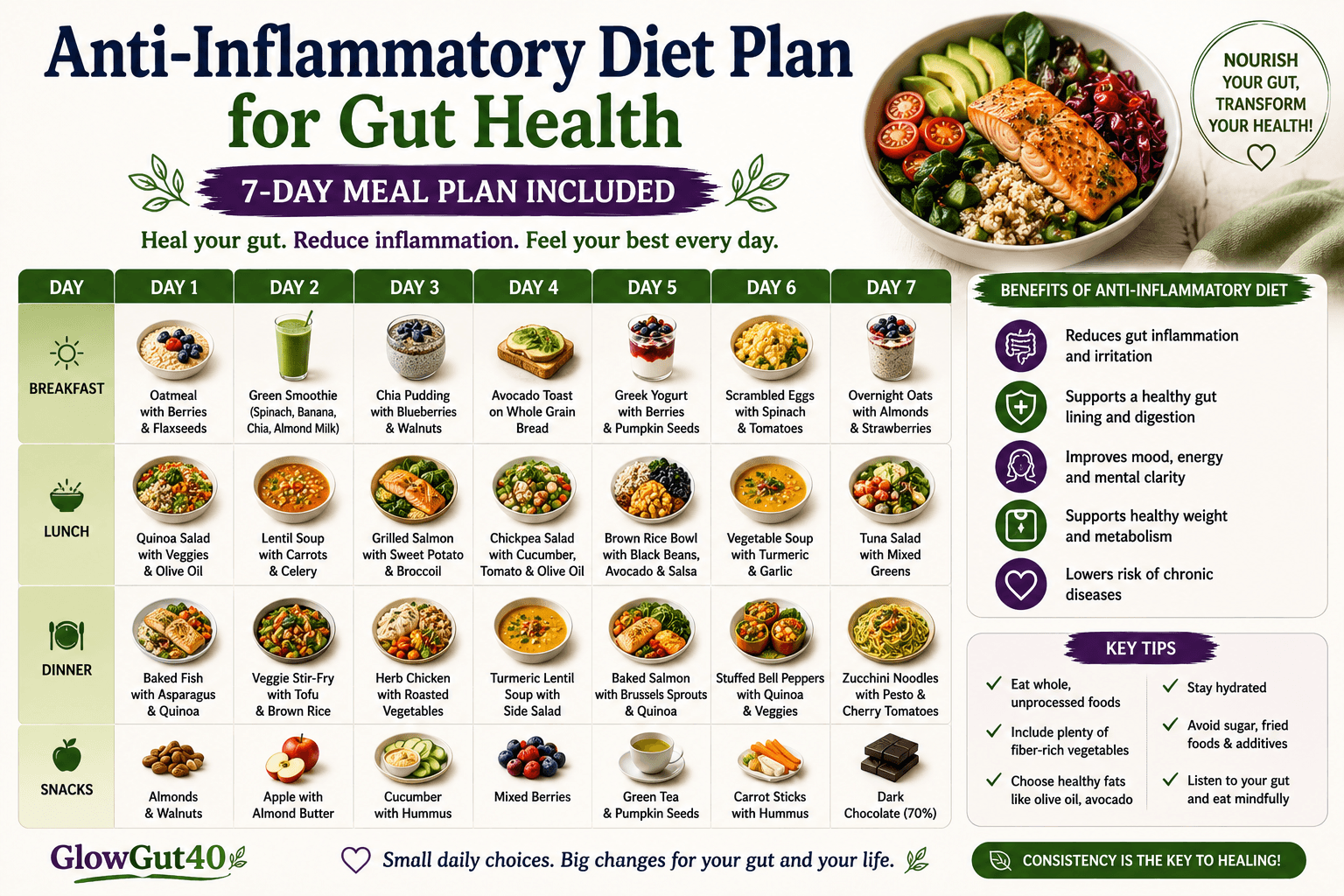
Anti-Inflammatory Diet Plan for Gut Health 7-Day Meal Plan + The Foods That Fight Inflammation From the Inside Out
Chronic inflammation starts in the gut — and the fastest way to turn it off is through the food on your plate. Here is exactly what to eat, what to avoid, and a complete 7-day plan to get started.
Illustration: Anti-inflammatory foods to eat more vs. pro-inflammatory foods to avoid for gut health
“Chronic inflammation is the silent engine behind most modern disease — and for the majority of Americans, it starts in the gut.”
Here’s a number that should stop you in your tracks: chronic inflammatory diseases affect an estimated 60% of all Americans, according to the National Institutes of Health. Heart disease, type 2 diabetes, obesity, autoimmune conditions, depression, joint pain — these are all fueled, in significant part, by chronic inflammation. And chronic inflammation, in most cases, begins in the gut.
When the gut microbiome is disrupted and the gut lining becomes permeable, inflammatory molecules flood the bloodstream. The immune system responds by going into a permanent low-level battle mode — what scientists call chronic low-grade inflammation. Left unchecked, this state quietly destroys tissue, disrupts hormones, accelerates aging, and creates the conditions for serious disease.
The good news is powerful and immediate: what you eat is the single fastest lever you can pull to reduce gut inflammation. Research published in Cell by Stanford University showed that dietary changes alone can measurably shift the gut microbiome — and inflammation levels — within just two weeks.
In this guide, you’ll get the complete anti-inflammatory diet plan for gut health — the science, the foods, what to avoid, and a practical 7-day meal plan you can start tomorrow.
Signs Your Gut Is Inflamed Right Now
Gut inflammation often doesn’t announce itself with dramatic symptoms. It operates quietly — producing effects that most people attribute to stress, aging, or bad luck. Watch for these signs:
- 🔥 Persistent bloating and gas after most meals
- 😴 Chronic fatigue that sleep does not fix
- 🦴 Joint pain or stiffness — especially in the morning
- 🤒 Skin problems — acne, eczema, rosacea, or dull skin
- 🧠 Brain fog and difficulty concentrating
- 😰 Mood instability, anxiety, or low mood
- ⚖️ Unexplained weight gain — especially around the belly
- 🩸 Blood sugar fluctuations and intense sugar cravings
If you experience 3 or more of these regularly, gut inflammation is very likely contributing. Take our free Gut Score Calculator for a personalized assessment.
What Causes Gut Inflammation? The Main Culprits
Before changing your diet, it helps to understand what’s driving the fire in the first place. The biggest causes of gut inflammation in America today are:
Illustration: The 5 biggest drivers of gut inflammation in the United States
The Standard American Diet — high in refined carbohydrates, vegetable oils, processed meats, and added sugars — is essentially a recipe for chronic gut inflammation. Research from Harvard T.H. Chan School of Public Health confirmed that dietary patterns high in these foods significantly elevate inflammatory biomarkers including CRP (C-reactive protein), IL-6, and TNF-alpha.
Identifying your personal triggers and systematically replacing them with anti-inflammatory alternatives is the foundation of this entire approach.
5 Core Principles of an Anti-Inflammatory Diet for Gut Health
Before diving into specific foods, these five foundational principles guide every effective anti-inflammatory diet for gut health:
Different colored plant foods contain different phytonutrients that fight different types of inflammation. Red (lycopene), orange (beta-carotene), purple (anthocyanins), green (chlorophyll, sulforaphane), and yellow (lutein) — each color targets distinct inflammatory pathways in the gut and bloodstream.
The American Gut Project found that people who ate 30+ different plant varieties per week had dramatically more diverse gut microbiomes and lower inflammatory markers. Aim for at least 5 different colored plants daily.
🎨 5+ colors daily = 5 anti-inflammatory pathways activatedThe ideal omega-6 to omega-3 ratio for human health is approximately 4:1. The typical American diet delivers a ratio of 15:1 to 20:1 — enormously pro-inflammatory. Omega-6 fatty acids (found in vegetable and seed oils like soybean, corn, and sunflower oil) promote inflammation. Omega-3 fatty acids (found in fatty fish, walnuts, flaxseed) suppress it.
Reducing seed oils and increasing omega-3 rich foods is one of the single most impactful dietary changes you can make for gut inflammation. Research in Gut journal found that omega-3 supplementation significantly reduced intestinal permeability and inflammatory cytokines in adults with elevated inflammation.
🐟 Eat fatty fish 3x per week ❌ Eliminate soybean, corn, and sunflower oilDietary fiber is the most powerful anti-inflammatory food compound available — because it directly feeds the bacteria that produce butyrate, propionate, and acetate (short-chain fatty acids). These SCFAs are the gut’s primary anti-inflammatory agents, directly suppressing the production of pro-inflammatory cytokines.
The average American eats only 10–15g of fiber per day. Increasing to 30g — through oats, legumes, vegetables, and fruit — creates a measurable anti-inflammatory effect within 2–4 weeks. Increase gradually (5g per week) to avoid bloating during the transition.
🫘 Beans are the most fiber-dense food per dollar ⚠️ Increase slowly — 5g per week to avoid gasA 2021 Stanford University study published in Cell — one of the most important nutrition studies of the decade — found that a high-fermented-food diet produced greater reductions in 19 inflammatory proteins compared to a high-fiber diet alone. Fermented foods directly introduce beneficial bacteria that compete with pro-inflammatory microbes and produce compounds that seal the gut lining.
At least one serving of fermented food daily — plain kefir, kimchi, sauerkraut, miso, or plain Greek yogurt — should be a non-negotiable part of any anti-inflammatory gut diet.
🥛 Stanford: fermented foods outperformed fiber for inflammation 🫙 Kimchi + kefir = most powerful combinationNo amount of anti-inflammatory food can overcome an ongoing diet of pro-inflammatory food. These four categories need to be significantly reduced — ideally eliminated — for meaningful results: refined sugar (drives dysbiosis and LPS release), seed and vegetable oils (high omega-6 directly promotes inflammation), ultra-processed foods (emulsifiers damage gut lining), and alcohol (increases gut permeability within hours).
You do not need to be perfect — an 80/20 approach is effective and sustainable. But consistently consuming these triggers while trying to reduce inflammation is like trying to cool down a room while leaving the oven on.
❌ Refined sugar: biggest single change you can make ❌ Seed oils: replace with olive oil and coconut oilBest Anti-Inflammatory Foods for Gut Health
These foods have the strongest scientific evidence for reducing gut inflammation, healing the gut lining, and supporting a healthy microbiome — all available at any US grocery store:
🫐 Polyphenol Powerhouses
🐟 Omega-3 Rich Foods
🥦 Gut-Healing Vegetables
🦠 Probiotic and Prebiotic Foods
Foods That Inflame Your Gut — Avoid These
Every one of these foods has strong clinical evidence linking it to increased gut inflammation, gut lining damage, or microbiome disruption. Reducing them is just as important as adding anti-inflammatory foods:
🌿 Anti-Inflammatory Spices and Herbs: Free Medicine in Your Kitchen
These spices and herbs have potent, clinically documented anti-inflammatory effects on the gut. Add them generously to every meal — they cost almost nothing and deliver remarkable benefits:
🗓️ 7-Day Anti-Inflammatory Meal Plan for Gut Health
Here is a complete, practical 7-day anti-inflammatory meal plan — all ingredients available at any US grocery store, designed for real people with real schedules:
| Day | Breakfast | Lunch | Dinner | Snack |
|---|---|---|---|---|
| Mon | Oat porridge + blueberries + walnuts + cinnamon | Salmon salad with spinach, avocado + olive oil dressing | Lentil soup with garlic, turmeric + ginger | Kefir + handful of almonds |
| Tue | Plain Greek yogurt + mixed berries + ground flaxseed | Broccoli stir-fry with tempeh + brown rice | Baked salmon + steamed asparagus + quinoa | Apple slices + walnut butter |
| Wed | Green smoothie: spinach, kefir, banana, ginger, flaxseed | Lentil bowl with roasted vegetables + tahini | Chicken thighs with turmeric + roasted sweet potato | Kimchi + hard boiled eggs |
| Thu | Scrambled eggs + sautéed greens in olive oil + berries | Sardine grain bowl: sardines on arugula, lemon, capers | Miso soup + baked cod + steamed broccoli | Dark chocolate (70%+) + blueberries |
| Fri | Overnight oats with chia seeds, kefir + berries | Large salad: mixed greens, avocado, chickpeas, olive oil | Stir-fry: salmon, bok choy, ginger, garlic + brown rice | Sauerkraut + whole grain crackers |
| Sat | Turmeric golden milk oats + banana + walnuts | Black bean tacos with kimchi slaw + avocado | Slow-cooked lentil dahl with turmeric + spinach | Plain yogurt + chia seeds + honey |
| Sun | Veggie omelette: eggs, spinach, tomato, turmeric | Broccoli and white bean soup with rosemary | Baked trout + garlic roasted vegetables + quinoa | Kombucha + handful of mixed nuts |
🧮 Want to Know Your Current Inflammation Level?
Take the free GlowGut40 Gut Score Calculator — find out your gut health score and get personalized next steps in 2 minutes. Check My Gut Score Free →Lifestyle Habits That Reduce Gut Inflammation
Diet is the most powerful lever — but it works best when supported by these complementary lifestyle practices that directly reduce gut inflammation:
Post-meal walking reduces blood sugar spikes (which drive inflammation), improves gut motility, and stimulates SCFA-producing bacteria. A University of Illinois study confirmed measurable anti-inflammatory effects from moderate daily walking alone.
Poor sleep elevates cortisol and CRP — two of the primary drivers of gut inflammation. The gut microbiome follows a circadian rhythm; consistent sleep is one of the most powerful anti-inflammatory interventions available. See: 5 Daily Gut Healing Habits →
Cortisol is a direct gut inflammation trigger. Even 5 minutes of slow breathing, a short walk in nature, or a brief meditation session measurably lowers cortisol. Over time, stress management has an anti-inflammatory effect comparable to moderate dietary changes.
Adequate hydration maintains the protective mucus layer that lines the gut wall and protects it from inflammatory triggers. Dehydration thins this layer, increasing vulnerability to gut inflammation. Add lemon or cucumber for extra gut-friendly polyphenols.
Eating within a consistent 12-hour window (e.g., 7am–7pm) gives the gut microbiome a repair window. Research shows time-restricted eating reduces inflammatory biomarkers and improves microbiome diversity even without calorie reduction.
⚠️ Common Mistakes That Slow Anti-Inflammatory Progress
The anti-inflammatory diet is not a detox or a cleanse — it’s a long-term eating pattern. One pizza or a glass of wine doesn’t undo weeks of progress. The 80/20 rule is not just acceptable — it’s recommended. Consistency over perfection is what produces lasting results.
You cannot eat a bowl of blueberries and a bag of chips and expect an anti-inflammatory result. Removing pro-inflammatory foods — particularly refined sugar, seed oils, and ultra-processed snacks — is equally as important as adding anti-inflammatory foods. Both sides of the equation matter.
Many people switch to salads and salmon — but continue cooking everything in soybean or corn oil. These oils are extremely high in omega-6 fatty acids that drive inflammation. Switch to extra virgin olive oil for low-heat cooking and coconut oil for high-heat. This single swap makes a significant difference.
Gluten-free packaged foods are often made with refined rice flour, tapioca starch, or potato starch — all high-glycemic, low-fiber ingredients that drive blood sugar spikes and gut inflammation. Gluten-free junk food is still junk food. Focus on whole, unprocessed foods rather than packaged “free-from” products.
Gut inflammation built over years of poor eating takes weeks to meaningfully reduce. Most people see initial improvements — reduced bloating, better energy — within 1–2 weeks. Significant anti-inflammatory results, measurable in blood markers, typically appear at 4–8 weeks. Give the process time.
❓ Frequently Asked Questions
The most evidence-backed anti-inflammatory diet for gut health combines elements of the Mediterranean diet with a focus on fermented foods. It emphasizes: fatty fish 3x per week, 30g+ of dietary fiber daily, daily fermented foods (kefir, kimchi, yogurt), extra virgin olive oil as the primary fat, abundant colorful vegetables and fruits, and elimination of refined sugar, seed oils, and ultra-processed foods. This pattern is supported by Harvard, NIH, and the American Heart Association.
Initial improvements in bloating, energy, and digestion typically appear within 1–2 weeks. Measurable reductions in inflammatory biomarkers (CRP, IL-6) generally occur at 4–6 weeks of consistent dietary changes. The Stanford Cell study found measurable microbiome shifts and inflammatory protein reductions within just 4 weeks of a high-fermented-food and high-fiber diet. Long-term adherence produces the most significant results — most people feel dramatically different at the 3-month mark.
Yes — the Mediterranean diet is one of the most extensively studied anti-inflammatory diets in the world. Multiple large-scale studies show it significantly reduces CRP, IL-6, and TNF-alpha — the primary inflammatory markers associated with gut and systemic inflammation. Its emphasis on olive oil, fatty fish, legumes, vegetables, whole grains, and moderate fermented dairy closely mirrors the anti-inflammatory gut health principles in this guide.
Yes — curcumin (the active compound in turmeric) has been shown in over 100 clinical studies to block NF-kB, the primary molecular switch that activates inflammatory gene expression in the gut. The key is bioavailability: curcumin alone is poorly absorbed, but combining it with black pepper (piperine) increases absorption by up to 2,000%. For significant effects, use at least 1 teaspoon of turmeric daily with black pepper in food or golden milk.
Refined sugar. It directly feeds pro-inflammatory and dysbiotic bacteria, triggers LPS release from the gut into the bloodstream, spikes insulin (a pro-inflammatory hormone), and disrupts the gut lining. Eliminating added sugar — particularly sugary beverages — is the single fastest dietary intervention for reducing gut inflammation. Harvard research confirms that replacing just one sugary drink per day with water or unsweetened tea produces measurable anti-inflammatory effects within weeks.
Food-first is always the priority. However, certain supplements have strong clinical evidence for reducing gut inflammation: omega-3 fish oil (2–3g EPA+DHA daily), curcumin with piperine, vitamin D (most Americans are deficient — low vitamin D directly increases gut inflammation), and probiotic supplements (multi-strain, 10+ billion CFUs). Supplements work best as additions to an anti-inflammatory diet — not as replacements for one. Always consult your doctor before starting supplements.
Final Thoughts: Your Fork Is Your Most Powerful Anti-Inflammatory Tool
Chronic gut inflammation is not an inevitable part of aging. It is not something you have to accept as “just how your body is.” In the vast majority of cases, it is a direct response to what you eat, how you sleep, how you move, and how you manage stress — all of which are within your control.
The anti-inflammatory diet for gut health is not restrictive or complicated. It is simply a shift toward real, whole, colorful, fiber-rich food — the kind of food humans have eaten for thousands of years before the modern food industry invented ultra-processed alternatives.
Start with the 7-day meal plan. Pick two pro-inflammatory foods to reduce this week. Add turmeric to one meal per day. Walk after dinner. Within weeks, you’ll feel the difference — in your digestion, your energy, your skin, and your mood.
Inflammation is not your destiny. It’s a response. And every meal is an opportunity to change it.
Start Your Anti-Inflammatory Journey Today
Explore more science-backed gut health and nutrition guides on GlowGut40 — designed to help you heal from the inside out.
