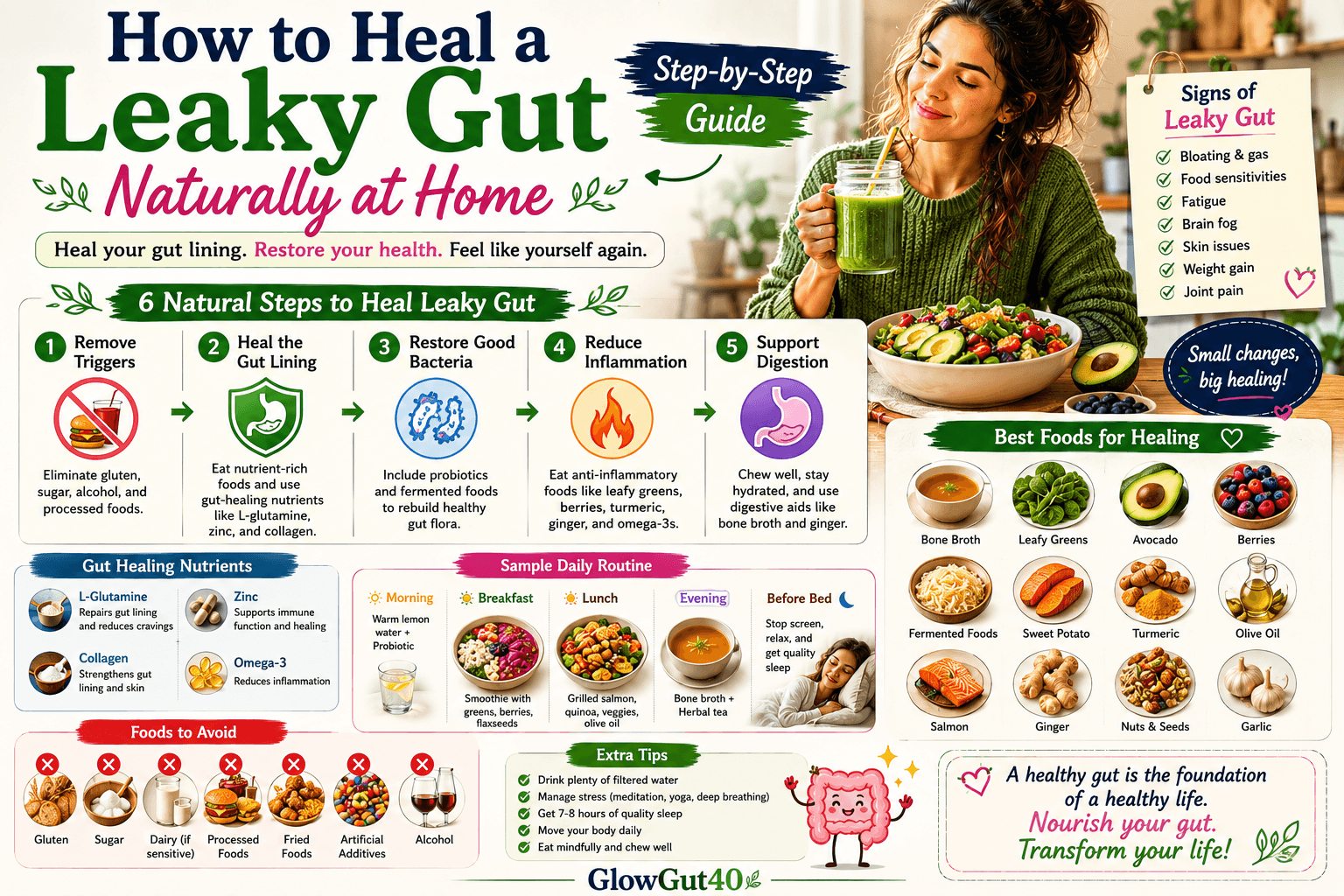
How to Heal Leaky Gut Naturally A Complete Step-by-Step Guide That Actually Works
Leaky gut is behind more health problems than most doctors realize. Here’s exactly how to heal your gut lining naturally — with food, lifestyle changes, and targeted supplements.
Illustration: Leaky gut (left) vs. healed gut (right) — tight junctions make all the difference
“Leaky gut isn’t just a digestive problem. It’s a whole-body problem — and healing it can change everything from your skin to your mood to your weight.”
If you’ve been struggling with bloating, fatigue, skin issues, brain fog, food sensitivities, or joint pain — and can’t figure out why — there’s a good chance leaky gut syndrome is quietly driving it all.
Leaky gut, or intestinal permeability, occurs when the lining of your small intestine becomes damaged. Tiny gaps form between the cells that line your gut wall, allowing partially digested food particles, toxins, and harmful bacteria to escape into your bloodstream. Your immune system treats these escaped particles as invaders — triggering chronic inflammation that can affect virtually every system in your body.
According to research published in the journal Frontiers in Immunology, increased intestinal permeability has been linked to autoimmune conditions, inflammatory bowel disease, metabolic syndrome, anxiety, depression, chronic fatigue, and skin disorders. In the United States, where ultra-processed food consumption is at an all-time high, leaky gut is becoming an epidemic — even if mainstream medicine is still catching up on the diagnosis.
This guide gives you a complete, step-by-step roadmap for healing leaky gut naturally — starting today.
Symptoms of Leaky Gut Syndrome
Because leaky gut triggers systemic inflammation, its symptoms appear all over the body — making it easy to misdiagnose or miss entirely. The most common signs include:
Illustration: Leaky gut symptoms appear far beyond the digestive system
Many of these symptoms overlap with other conditions — which is why leaky gut often goes undiagnosed for years. If you experience 3 or more of these symptoms regularly, gut lining damage is worth investigating. Start with our free Gut Score Calculator →
What Causes Leaky Gut? The 6 Biggest Culprits
Understanding what damaged your gut lining in the first place is essential — because healing leaky gut naturally means removing the cause, not just treating the symptoms. Here are the six most common triggers in America:
- 🍟 Ultra-Processed Foods — Emulsifiers, artificial additives, and refined sugars directly damage tight junctions in the gut lining. This is the #1 cause in the US.
- 💊 Antibiotic Overuse — Destroys the protective bacterial layer that keeps the gut lining intact. The CDC estimates 47 million unnecessary antibiotic prescriptions are written in the US annually.
- 🧴 NSAIDs (Ibuprofen, Aspirin) — Long-term use of common pain relievers directly increases intestinal permeability according to research published in Gut journal.
- 😰 Chronic Stress — Cortisol weakens the gut lining over time. Prolonged psychological stress is a clinically documented trigger for increased intestinal permeability.
- 🍺 Excessive Alcohol — Even moderate alcohol consumption increases gut permeability within hours by disrupting tight junction proteins.
- 😴 Poor Sleep — Chronic sleep deprivation reduces the production of gut-protective mucus and weakens tight junction integrity. The NIH links poor sleep directly to elevated gut permeability markers.
How to Heal Leaky Gut Naturally: 6-Step Protocol
You cannot heal a wound while still cutting it. The first and most critical step in healing leaky gut naturally is eliminating the foods and habits that are actively damaging your gut lining every single day.
Remove these immediately:
- Ultra-processed foods with emulsifiers (carrageenan, polysorbate-80)
- Refined sugar and high-fructose corn syrup
- Gluten — for many people with leaky gut, gluten triggers zonulin release, which directly opens tight junctions
- Conventional dairy (if you notice symptoms)
- Alcohol — even moderate amounts increase permeability
- NSAIDs — consult your doctor about alternatives
- Artificial sweeteners (sucralose, saccharin, aspartame)
You don’t need to be perfect. A consistent 80/20 approach — removing these foods 80% of the time — produces meaningful improvements within 2–3 weeks.
🔑 Most important step ⚠️ Do this first before supplementsCertain foods contain nutrients that directly repair the gut lining, reduce intestinal inflammation, and strengthen tight junctions. These should become the foundation of your daily diet.
For the complete food guide: 10 Best Foods for Gut Health →
🦴 Bone broth is the #1 gut-healing food 🐟 Aim for omega-3 fish 3x/weekHealing leaky gut naturally requires repopulating the gut with beneficial bacteria that produce the compounds needed to repair tight junctions. A healthy microbiome is the gut lining’s best defense system.
Best probiotic foods for leaky gut: Kefir, plain Greek yogurt, kimchi, sauerkraut, miso, and kombucha. Eat at least one serving daily — these are your most powerful natural medicine.
Best prebiotic foods: Garlic, onions, oats, bananas, and asparagus. These feed the bacteria that produce butyrate — a short-chain fatty acid that is the primary fuel source for gut lining cells (colonocytes).
Want to understand the difference between these two? Read: Probiotics vs Prebiotics: What’s the Difference? →
🥛 Kefir is most powerful for leaky gut repair 🌾 Oats provide butyrate-producing fiberWhile food should always come first, certain well-researched supplements can accelerate leaky gut healing — especially in the early stages when damage is significant. Here are the most evidence-backed options:
L-Glutamine
The most important supplement for leaky gut. L-glutamine is an amino acid that is the primary fuel source for intestinal cells. Research published in Clinical Nutrition showed that L-glutamine supplementation significantly reduced intestinal permeability in patients with increased gut leakage. Typical dose: 5–10g per day in divided doses.
Zinc Carnosine
Zinc deficiency is extremely common in Americans — and zinc is critical for maintaining tight junction proteins in the gut wall. A 2011 study in Inflammatory Bowel Diseases found zinc carnosine supplementation significantly reduced gut permeability and improved gut lining integrity. Dose: 75–150mg per day.
Collagen Peptides
Collagen provides glycine and proline — amino acids that directly repair the connective tissue of the gut lining. Bone broth is the food equivalent, but collagen supplements provide a more concentrated dose. Add 1–2 scoops to morning coffee, smoothies, or soups.
Digestive Enzymes
When the gut lining is damaged, enzyme production decreases — meaning food is poorly digested, which creates more gut irritation. A broad-spectrum digestive enzyme taken with meals helps break down food more completely while the lining heals.
Quercetin
A powerful plant flavonoid found in onions, apples, and capers. Research shows quercetin directly strengthens tight junction proteins and reduces intestinal inflammation. Available as a supplement (500–1000mg per day) or through regular consumption of onions and apples.
This step is non-negotiable — and it’s the one most people skip because it seems too simple to matter. It matters enormously.
Chronic stress releases cortisol, which directly increases gut permeability by disrupting the proteins that hold tight junctions together. A 2017 study in Psychosomatic Medicine found that psychological stress alone — without any dietary changes — produced measurable increases in intestinal permeability within 24 hours.
Sleep is equally critical. During deep sleep, your gut undergoes repair and regeneration. The gut lining — which replaces itself every 3–5 days — does most of its repair work at night. Chronic sleep deprivation directly slows this process.
Practical stress reduction tools that work:
- 4-7-8 breathing (inhale 4 counts, hold 7, exhale 8) — reduces cortisol in minutes
- 10-minute walk after meals — reduces stress hormones and aids digestion
- No screens 60 minutes before bed — protects melatonin and sleep quality
- Journal for 5 minutes before sleep — clears stress signals from the nervous system
For the full connection: 5 Daily Gut Healing Habits Every Woman Over 40 Should Know →
😴 7–9 hours is the gut healing target 🧘 5 min stress relief = measurable cortisol dropExercise is a powerful tool for healing leaky gut — but the type and intensity matter. Intense, prolonged exercise (like marathon training) actually increases gut permeability temporarily. Moderate, consistent exercise is what heals it.
A 2019 study from the University of Illinois found that 30–60 minutes of moderate aerobic exercise (walking, cycling, swimming) three times per week significantly increased the diversity of gut bacteria and reduced inflammatory markers associated with leaky gut — independent of diet.
Best exercises for leaky gut healing:
- Brisk walking (30 min after dinner is ideal — reduces post-meal inflammation)
- Yoga and stretching (activates the vagus nerve, which directly supports gut healing)
- Swimming (low-impact, full-body movement that reduces systemic inflammation)
- Cycling (moderate pace — improves gut motility and microbiome diversity)
⏱️ Leaky Gut Healing Timeline: What to Expect
Healing leaky gut naturally takes time — but most people see meaningful improvements much sooner than they expect. Here’s a realistic timeline:
1–7
Bloating and gas begin reducing within days of cutting ultra-processed foods. Energy may temporarily dip as your gut adjusts. Stay consistent.
2–3
The gut lining regenerates every 3–5 days. By week 2–3, the first signs of healing appear: less bloating after meals, improved energy, and clearer thinking.
4–6
Probiotic and prebiotic foods begin producing measurable microbiome diversity. Skin improvements and mood stabilization often appear at this stage.
8–12
Immune system calms down. Food intolerances begin improving. Joint pain and fatigue reduce. Most people feel dramatically better by this point.
Months
With consistent effort, full restoration of tight junction integrity is achievable. This is where autoimmune symptoms, chronic fatigue, and systemic inflammation see the greatest improvement.
🧮 Where Are You in Your Gut Healing Journey?
Take the free GlowGut40 Gut Score Calculator and find out your current gut health score in 2 minutes. Check My Gut Score Free →⚠️ Common Mistakes That Slow Leaky Gut Healing
Supplements support healing — they don’t cause it. If you’re still eating ultra-processed food, no amount of L-glutamine or probiotics will repair your gut lining. Food changes must come first.
The gut lining takes weeks to months to fully heal. Many people give up after 7–10 days because they don’t see dramatic results. Stick with it — the biggest improvements come at weeks 4–8.
Probiotic bacteria need prebiotic fiber to produce the butyrate that heals the gut lining. Without adequate fiber, your probiotics arrive to an inhospitable environment and have minimal impact.
Ibuprofen and aspirin are direct contributors to leaky gut. If you take them regularly for pain, talk to your doctor about alternatives — chronic NSAID use will actively undermine your healing efforts.
Many people treat gut healing as purely a food issue and completely ignore stress management. Cortisol directly damages tight junctions. No gut healing protocol is complete without stress reduction.
Dehydration reduces the production of the protective mucus layer that lines and protects the gut wall. Aim for at least 8 glasses of filtered water daily — more if you’re exercising or in a dry climate.
❓ Frequently Asked Questions
Yes — for most people, leaky gut can be fully healed with consistent dietary changes, lifestyle modifications, and targeted supplementation. The gut lining regenerates every 3–5 days, meaning the body is constantly trying to repair itself. With the right support, most people achieve full tight junction restoration within 3–6 months of consistent effort.
Most people notice initial improvements — reduced bloating, better energy — within 2–3 weeks. Significant healing typically occurs between weeks 4–8. Full restoration of the gut lining and systemic inflammation reduction can take 3–6 months depending on the severity of damage and consistency of the healing protocol.
L-Glutamine is the most evidence-backed supplement for healing leaky gut. It directly fuels intestinal cell regeneration and reduces gut permeability. Zinc carnosine is a close second, as it specifically strengthens tight junction proteins. Collagen peptides and digestive enzymes also provide meaningful support. Always use supplements alongside dietary changes — not as a replacement for them.
Research led by Dr. Alessio Fasano at Harvard has shown that gliadin (a component of gluten) triggers the release of zonulin — a protein that directly opens tight junctions in the gut wall — in both people with celiac disease and in some people without it. For individuals with leaky gut, a gluten elimination trial of 4–6 weeks is often recommended to assess whether it is a contributing trigger.
Yes — bone broth is one of the most powerful natural foods for leaky gut healing. It’s rich in collagen, gelatin, glutamine, and glycine — compounds that directly support gut lining cell repair and regeneration. While large-scale clinical trials are still ongoing, the biochemical rationale is strong, and it has been used therapeutically for gut healing for centuries. Make it at home or buy high-quality brands (look for organic, grass-fed sourcing).
If your symptoms are severe, worsening, or have persisted for months, seeing a gastroenterologist is strongly recommended. A doctor can order tests including lactulose/mannitol permeability tests, zonulin levels, and comprehensive stool analysis to assess the extent of gut damage. Many of the dietary and lifestyle strategies in this guide can complement medical treatment significantly.
Final Thoughts: Healing Leaky Gut Is Possible — and It Starts Today
Leaky gut is one of the most pervasive and underdiagnosed conditions in America — hiding behind dozens of seemingly unrelated symptoms that most people accept as “just part of getting older.” They aren’t.
The gut lining is remarkably resilient. Given the right conditions — real food, adequate fiber, beneficial bacteria, stress management, quality sleep, and gentle movement — it begins healing faster than most people expect. The cells that line your gut wall replace themselves completely every 3–5 days. Your body wants to heal. It just needs you to stop fighting against it.
Start with Step 1 today. Remove one gut trigger. Add one gut-healing food. That’s all it takes to begin. Healing leaky gut naturally doesn’t require perfection — it requires consistency, patience, and the belief that your body has the ability to repair itself.
Because it does.
Ready to Start Healing Your Gut From the Inside Out?
Explore the complete GlowGut40 gut health library — science-backed guidance for women over 40.
