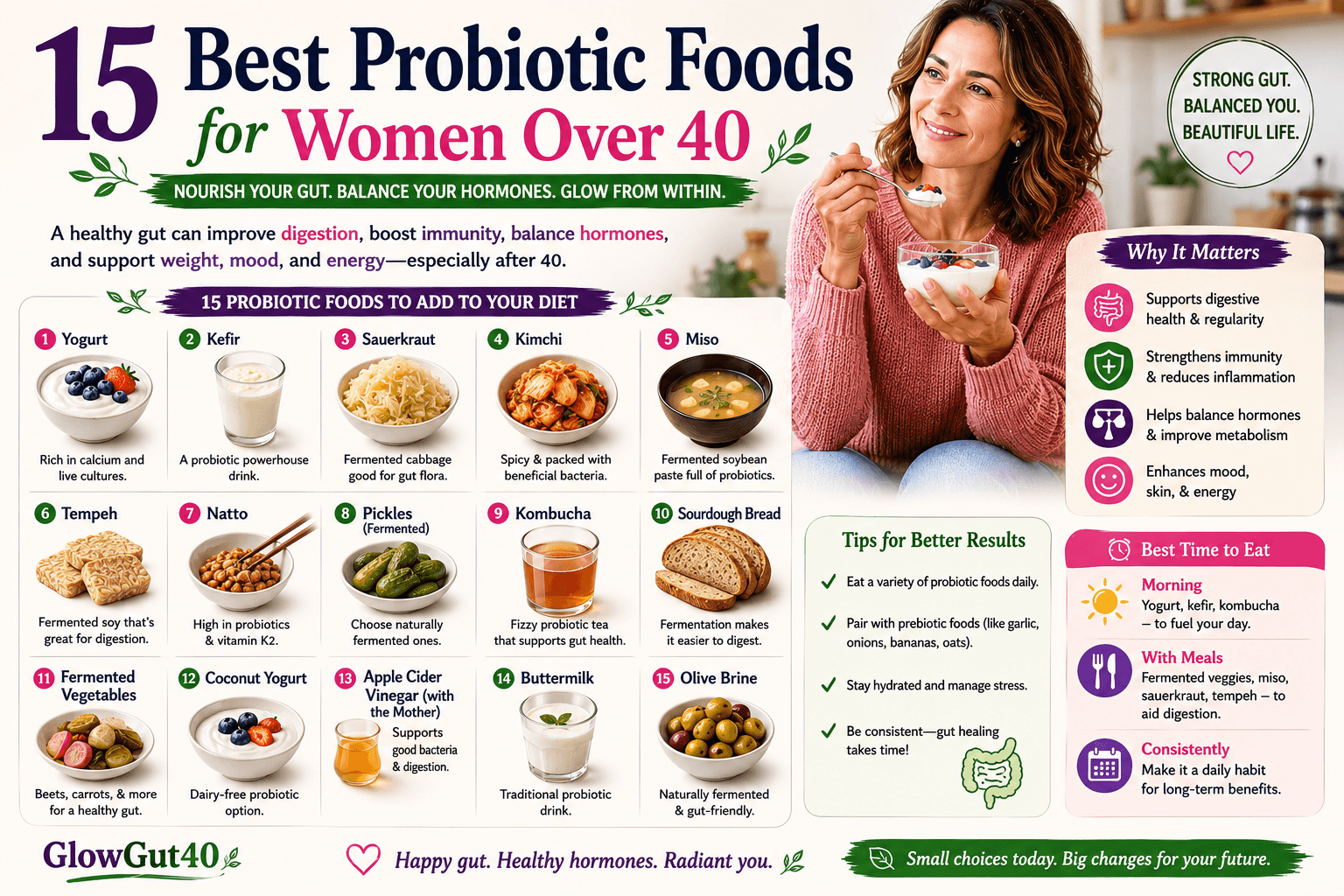
15 Best Probiotic Foods for Women Over 40 Backed by Science — Available at Every US Grocery Store
Your gut changes after 40. These probiotic-rich foods are specifically powerful for women navigating hormonal shifts, slower metabolism, and declining microbiome diversity.
Illustration: 10 of the 15 best probiotic foods — all available at US grocery stores
“After 40, your gut microbiome diversity starts naturally declining — but the right probiotic foods can reverse that trend faster than any supplement.”
Here’s something most women over 40 don’t realize: the gut microbiome goes through significant changes during perimenopause and menopause. Estrogen plays a key role in maintaining gut lining integrity and microbiome diversity — and as estrogen drops, so does the gut’s natural resilience.
The result? More bloating, more digestive issues, more inflammation, slower metabolism, and yes — more stubborn belly fat. But here’s the good news: probiotic foods are one of the most powerful and affordable tools you have to fight back.
According to a 2022 study published in Cell Host & Microbe, women who regularly consumed fermented, probiotic-rich foods showed significantly higher microbiome diversity and lower inflammatory markers compared to those who didn’t — regardless of age. The gut responds to good food at any age.
In this guide, we’ll walk through the 15 best probiotic foods for women over 40 — ranked by bacterial potency, availability at US stores, and specific benefits for women’s health after 40.
🥇 Top 5 Probiotic Foods — Highest Bacterial Count
These five foods deliver the highest concentration of live beneficial bacteria. They should be the foundation of any gut-healing diet for women over 40.
Kefir is fermented milk that contains anywhere from 12 to 61 strains of beneficial bacteria and yeasts — far more than standard yogurt. A single cup can deliver up to 27 billion CFUs of live cultures, making it the most potent probiotic food available in the US.
For women over 40, kefir offers a triple benefit: it supports gut health, delivers calcium and vitamin K2 for bone health (critical during perimenopause), and contains tryptophan — a precursor to serotonin that supports mood stability.
A 2020 study in Frontiers in Nutrition found that daily kefir consumption for 8 weeks significantly reduced gut inflammation and improved lactose digestion in women aged 40–65.
🦠 Up to 61 bacterial strains 💪 Bone health (calcium + K2) 😊 Mood support (tryptophan)Kimchi is fermented cabbage (and sometimes other vegetables) loaded with Lactobacillus kimchii and other powerful bacterial strains. It’s one of the most anti-inflammatory probiotic foods in existence — and its benefits for women over 40 are remarkable.
A study published in the Journal of Medicinal Food found that regular kimchi consumption significantly reduced body weight, body fat percentage, and fasting blood sugar — all major concerns for women navigating hormonal changes after 40.
Kimchi also contains vitamins A, B, and C, plus powerful antioxidants from the chili and garlic that further reduce gut inflammation.
🔥 Reduces visceral fat 🩸 Stabilizes blood sugar ⚡ High in vitamins A, B, CGreek yogurt is the most widely available and easiest-to-eat probiotic food in the US — and when chosen correctly, it’s incredibly powerful. The key is buying plain, full-fat Greek yogurt with “live and active cultures” on the label.
Greek yogurt is particularly valuable for women over 40 because it’s high in protein (15–20g per serving), which supports muscle maintenance during the metabolic slowdown that accompanies menopause. It also delivers calcium, phosphorus, and vitamin B12.
The Harvard T.H. Chan School of Public Health recommends yogurt as one of the most evidence-backed dairy foods for reducing risk of type 2 diabetes and cardiovascular disease — both of which become more relevant for women after 40.
💪 15–20g protein per serving 🦴 High calcium for bones 🧬 Live Lactobacillus strainsSauerkraut — fermented cabbage — is one of the oldest probiotic foods in the world. Two tablespoons of raw, unpasteurized sauerkraut can contain over 10 billion CFUs of live Lactobacillus bacteria per serving.
What makes sauerkraut especially valuable for women over 40 is its high vitamin C content and natural enzymes that support digestion. It’s also rich in fiber, which acts as a prebiotic to feed the bacteria you’re introducing.
Important: most store-bought sauerkraut in cans is pasteurized — which kills all bacteria. Always buy refrigerated, raw, unpasteurized sauerkraut for probiotic benefits.
🦠 10+ billion CFUs per serving 🍊 High vitamin C 🌿 Built-in prebiotic fiberSauerkraut — fermented cabbage — is one of the oldest probiotic foods in the world. Two tablespoons of raw, unpasteurized sauerkraut can contain over 10 billion CFUs of live Lactobacillus bacteria per serving.
What makes sauerkraut especially valuable for women over 40 is its high vitamin C content and natural enzymes that support digestion. It’s also rich in fiber, which acts as a prebiotic to feed the bacteria you’re introducing.
Important: most store-bought sauerkraut in cans is pasteurized — which kills all bacteria. Always buy refrigerated, raw, unpasteurized sauerkraut for probiotic benefits.
🦠 10+ billion CFUs per serving 🍊 High vitamin C 🌿 Built-in prebiotic fiberKombucha is fermented tea that contains a mix of bacterial strains and beneficial yeasts. It’s one of the easiest probiotic foods to incorporate because it comes in a bottle and tastes great — making it the perfect replacement for soda or juice.
For women over 40, kombucha offers the added benefit of antioxidants from the tea base (especially green tea varieties), B vitamins, and organic acids like acetic and gluconic acid that support liver detoxification.
Choose low-sugar kombucha (under 5g per serving). The FDA recommends no more than 4 oz per day for beginners as the organic acids can cause digestive discomfort in larger amounts initially.
🍵 Antioxidants from tea base 🫀 Liver support (organic acids) ⚡ B vitamins for energyFoods #6–10: Everyday Gut Boosters
These five probiotic foods are slightly less potent in raw bacterial count but offer unique benefits — and they’re incredibly easy to add to your daily meals.
Illustration: Relative probiotic potency of top fermented foods for women over 40
Foods #11–15: Underrated Probiotic Gems
These five foods are often overlooked but offer excellent probiotic benefits — especially for women over 40 who want variety in their gut-healing diet.
How to Easily Add Probiotic Foods to Your Daily Diet
The biggest challenge most women face isn’t knowing which probiotic foods to eat — it’s figuring out how to consistently include them without overhauling their entire routine. Here’s how to make it effortless:
🌅 Morning Routine
Replace your morning yogurt with plain kefir or use it as the base of your smoothie. Add a handful of oats (prebiotic) and blueberries. This creates a powerful synbiotic breakfast in under 5 minutes.
🥗 Lunch Additions
Add a small side of kimchi or sauerkraut to any lunch — salads, grain bowls, sandwiches, or wraps. Even 2 tablespoons per day delivers meaningful probiotic benefits.
🍵 Afternoon Swap
Replace afternoon soda or juice with a low-sugar kombucha. This one swap alone introduces billions of beneficial bacteria daily while eliminating sugar that destroys good gut bacteria.
🌙 Dinner Boost
Use miso paste in salad dressings or soup bases. Add a tablespoon of raw apple cider vinegar to salad dressing. Serve alongside a small portion of kimchi or sauerkraut.
🗓️ 7-Day Probiotic Meal Plan for Women Over 40
Here’s a simple, practical 7-day plan using the probiotic foods from this list — all affordable and easy to find at US grocery stores:
🧮 Want a Personalized Gut Health Plan?
Take the free GlowGut40 Gut Score Calculator — get your gut score + personalized next steps in 2 minutes. Check My Gut Score Free →⚠️ What Kills Probiotics in Your Food
You can eat all the right probiotic foods and still get minimal benefit if you make these common mistakes that kill beneficial bacteria before they reach your gut:
- 🔥 Heat above 115°F (46°C) — kills all live bacteria. Never cook kimchi, miso, or sauerkraut at high heat. Add them after cooking or use raw.
- ☕ Coffee taken immediately before/after probiotics — the acidity disrupts bacterial survival. Space coffee and probiotic foods by 30–60 minutes.
- 🍬 Added sugar in “probiotic” products — feeds harmful bacteria and cancels probiotic benefits. Always choose unsweetened versions.
- 🏺 Pasteurized fermented foods — most canned sauerkraut and pickles are pasteurized. Pasteurization kills all bacteria. Always buy refrigerated, raw versions.
- 🧼 Antibiotics taken concurrently — antibiotics kill both harmful and beneficial bacteria. If on antibiotics, take probiotics at least 2 hours apart and continue for 30 days after finishing the course.
Do Women Over 40 Need Probiotic Supplements?
The short answer: food first, always. But there are specific situations where a high-quality probiotic supplement makes sense for women over 40:
- Within 24 hours of finishing a course of antibiotics
- After significant gut illness (food poisoning, GI infection)
- During periods of extreme stress or travel
- When dietary restrictions prevent regular fermented food intake
- When diagnosed with IBS, IBD, or significant gut dysbiosis
If you do supplement, the Mayo Clinic recommends looking for: multiple strains (both Lactobacillus and Bifidobacterium), at least 10–50 billion CFUs, enteric coating, and third-party testing verification.
For a deeper dive on supplements: Postbiotics for Women Over 40: Beyond Basic Probiotics →
⚠️ Common Mistakes Women Make With Probiotic Foods
Flavored yogurts can contain up to 20g of added sugar per serving. That sugar feeds harmful bacteria and completely negates the probiotic benefit. Always choose plain.
Probiotic bacteria are transient — they don’t permanently colonize your gut. You need to eat probiotic foods daily or near-daily to maintain their benefits. Consistency is everything.
Adding miso paste to boiling soup or stir-frying kimchi at high heat kills all the beneficial bacteria. Add these foods after cooking, or at very low heat.
Probiotic bacteria need prebiotic fiber to survive in your gut. Without garlic, oats, bananas, and beans — your probiotic foods have far less impact. Always combine both. See: Probiotics vs Prebiotics Guide →
❓ Frequently Asked Questions
Kefir is the #1 probiotic food for women over 40. It contains up to 61 different bacterial and yeast strains, delivers calcium and vitamin K2 for bone health, and provides tryptophan for mood support — all of which become increasingly important after 40. Plain, unsweetened kefir consumed daily produces the most consistent gut health improvements.
Research suggests at least one serving of probiotic-rich food daily for maintenance. For therapeutic purposes — after antibiotics or during gut healing — two servings per day (e.g., kefir in the morning and kimchi at dinner) accelerates recovery. Start with one serving and gradually increase to avoid initial bloating as your microbiome adjusts.
Yes — emerging research shows a strong connection between gut health and hormonal balance during menopause. The gut microbiome contains bacteria (called the “estrobolome”) that help metabolize estrogen. A healthier gut microbiome from probiotic-rich foods supports more stable estrogen metabolism, which may reduce hot flashes, mood swings, and weight gain associated with menopause.
For most healthy adults, yes — daily probiotic food consumption is safe and beneficial. Some people experience mild bloating or gas in the first 1–2 weeks as their microbiome adjusts. If you have a severely compromised immune system, SIBO, or are critically ill, consult your doctor before significantly increasing probiotic food intake.
Probiotic foods come with a natural fiber and nutrient matrix that protects bacteria and enhances their survival in your gut. Supplements deliver higher CFU counts but lack this natural support system. Most research supports food-based probiotics as equally effective for everyday gut maintenance — supplements are best reserved for specific therapeutic uses or when dietary intake is insufficient.
Yes — plain Greek yogurt with live and active cultures (look for this label) contains billions of CFUs per serving, primarily Lactobacillus bulgaricus and Streptococcus thermophilus. While not as diverse as kefir, daily yogurt consumption has been shown in multiple studies to reduce gut inflammation, improve digestion, and support immune function in women over 40.
Final Thoughts: Make Probiotic Foods a Daily Non-Negotiable
After 40, your gut needs consistent, daily support — and these 15 probiotic foods are your most powerful, most affordable, and most natural tools for providing it.
You don’t need to eat all 15. You don’t need to overhaul your entire diet overnight. Start with one food from this list — kefir, plain yogurt, or a small serving of kimchi — and eat it every single day for two weeks. Just that one consistent change will begin reshaping your microbiome in ways you’ll feel.
Better digestion. Less bloating. More energy. Clearer skin. Improved mood. These are not promises — they are documented outcomes of consistent probiotic food intake, backed by research from institutions like NIH, Harvard, and Stanford.
Your gut is ready to heal. Feed it well.
Start Healing Your Gut From the Inside Out
Explore more science-backed gut health guides on GlowGut40 — designed for women over 40.
