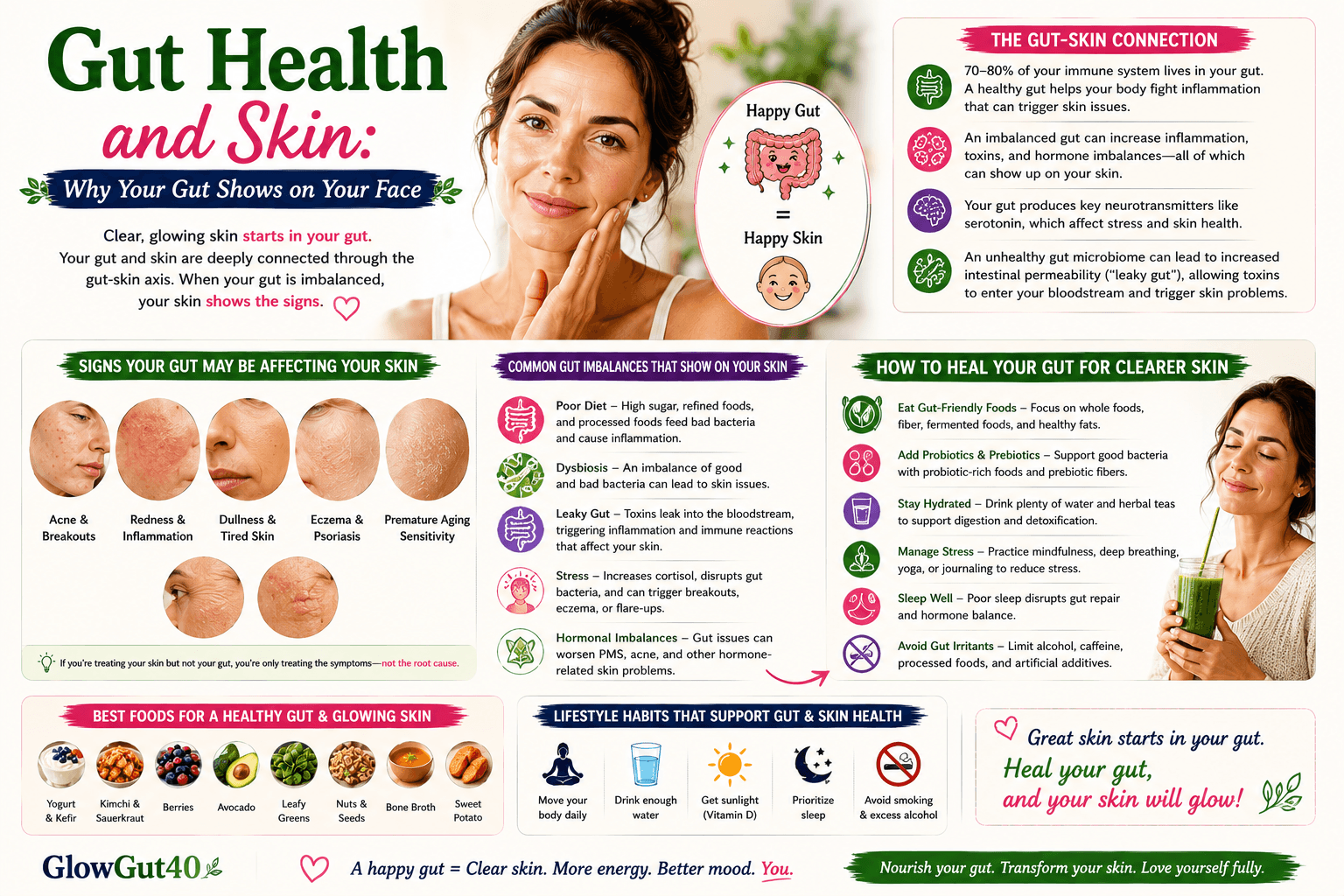
Gut Health and Skin: Why Your Gut Shows on Your Face The Gut-Skin Axis Explained — And How to Get Clear Skin From the Inside Out
Acne, eczema, rosacea, dull skin — before you buy another skincare product, look at what’s happening inside your gut. Your skin is a mirror of your microbiome.
Illustration: The gut-skin axis — an unhealthy microbiome shows directly on your face
“I spent thousands of dollars on skincare — serums, prescriptions, dermatologist visits. Nothing worked until I fixed my gut. Within 6 weeks of changing my diet, my skin cleared more than it had in years.”
That story is far more common than most people realize — and far more scientifically grounded than most dermatologists will tell you. The connection between gut health and skin is one of the most significant and underutilized areas of modern dermatology.
Here’s the truth that the skincare industry would rather you didn’t know: the root cause of many chronic skin conditions — including acne, eczema, rosacea, and premature aging — is not on your face. It’s in your gut.
According to research published in the Journal of Dermatological Science, patients with acne, eczema, and rosacea consistently show altered gut microbiome composition compared to people with healthy skin. The skin is not just the body’s largest organ — it is its most visible diagnostic report card, displaying the state of your gut health for everyone to see.
In this guide, we’ll walk through exactly how your gut health affects your skin, which skin conditions are most gut-related, the specific foods that create clear skin from the inside, and a step-by-step plan to start seeing results within weeks.
What Is the Gut-Skin Axis?
The gut-skin axis is the bidirectional communication network between your gut microbiome and your skin. Just as scientists describe the gut-brain axis (the communication highway between your gut and your mental state), the gut-skin axis describes how your gut constantly sends chemical and inflammatory signals that directly determine the health, appearance, and behavior of your skin.
Both the gut and the skin share several critical functions: they both act as physical barriers between the internal body and the outside world, they both house massive immune cell populations, and they both communicate directly with the brain and the systemic immune system.
When the gut microbiome is healthy and diverse, the signals it sends support skin barrier function, reduce skin inflammation, regulate sebum production, and maintain the skin’s own protective microbiome. When the gut is inflamed, dysbiotic, or permeable, the signals it sends do the opposite — breaking down skin barrier function, triggering inflammatory skin conditions, and accelerating skin aging.
Illustration: The Gut-Skin Axis — bidirectional communication that determines how your skin looks and behaves
The three primary pathways through which the gut affects skin are:
- Systemic inflammation — gut-driven inflammatory signals reach the skin through the bloodstream
- Immune dysregulation — 70% of the immune system lives in the gut; when it’s dysregulated, skin immune responses become hyperactive
- Nutritional absorption — a damaged gut absorbs fewer of the vitamins and minerals that healthy skin depends on (vitamins A, C, E, zinc, omega-3s)
How Your Gut Health Directly Affects Your Skin — 4 Key Mechanisms
When the gut lining becomes permeable (leaky gut), bacterial toxins called lipopolysaccharides (LPS) escape into the bloodstream. The immune system mounts an inflammatory response — and that inflammation travels to the skin, triggering acne, eczema flares, rosacea, and general skin redness and irritation.
Research from Harvard Medical School found that people with chronic skin conditions had significantly elevated blood levels of LPS compared to people with healthy skin — directly linking leaky gut to skin inflammation. Healing the gut lining reduces LPS levels and, with it, skin inflammation.
🛡️ Heal leaky gut → reduce skin inflammationYour skin has its own microbiome — a community of bacteria that protects against pathogens, maintains skin pH, and supports barrier function. Research published in Science Translational Medicine found a direct correlation between gut microbiome composition and skin microbiome composition. When harmful gut bacteria dominate, skin bacteria shift toward pro-inflammatory, acne-causing strains like C. acnes.
This means a healthy gut literally creates a healthier skin microbiome — reducing breakouts, calming sensitivity, and strengthening the skin’s natural protective barrier.
🌍 Gut diversity → Skin microbiome diversityThe gut is responsible for absorbing the vitamins and minerals that healthy skin depends on — vitamin A (skin cell turnover), vitamin C (collagen production), vitamin E (antioxidant protection), zinc (wound healing and sebum control), and omega-3 fatty acids (anti-inflammatory and moisture barrier support).
When the gut lining is damaged, absorption of all of these is compromised. You can eat the healthiest diet in the world — but if your gut can’t absorb what you eat, your skin won’t receive what it needs. This is why people with leaky gut or gut dysbiosis often show signs of nutritional deficiency in their skin despite eating well.
🥗 Heal the gut → maximize skin nutrient absorptionAn inflamed, dysbiotic gut sends distress signals to the brain via the vagus nerve, triggering elevated cortisol release. Cortisol is one of the most potent accelerators of skin aging — it breaks down collagen, increases sebum production (leading to acne), and thins the skin barrier. Research published in Psychosomatic Medicine confirmed that gut inflammation directly elevates cortisol, which in turn produces measurable changes in skin appearance and aging rate.
This explains why people under chronic stress often see sudden worsening of their skin — even when their skincare routine hasn’t changed. The stress response that’s damaging their skin is being driven, in large part, by their gut.
⏱️ Calm the gut → lower cortisol → slow skin agingGut Health and Acne: What the Research Actually Shows
Acne is the most extensively studied skin condition in relation to gut health — and the findings are striking. A landmark 2011 study in Gut Pathogens found that patients with acne had significantly lower populations of Lactobacillus and Bifidobacterium bacteria compared to clear-skinned controls — exactly the bacteria that regulate skin inflammation and sebum production.
A 2016 study in the Journal of the Academy of Nutrition and Dietetics found that high-glycemic diets (refined sugar, white bread, processed carbs) — which directly damage gut bacteria — were independently associated with increased acne severity in American women.
The gut-acne connection works through multiple pathways:
- Gut dysbiosis increases IGF-1 (insulin-like growth factor) — which stimulates excess sebum production and skin cell overgrowth, both of which drive acne
- Leaky gut releases LPS that triggers skin inflammation and hyperactivates the skin immune response
- Low Lactobacillus populations mean reduced production of lactic acid — a natural skin antimicrobial that keeps acne-causing bacteria in check
- Poor gut absorption reduces zinc levels — and zinc deficiency is one of the most documented nutritional causes of acne
Gut Health and Eczema: Why Probiotics Change Everything
Eczema (atopic dermatitis) affects over 31 million Americans (National Eczema Association) and is one of the conditions most strongly linked to gut health. Research shows that children and adults with eczema consistently have lower gut microbiome diversity and depleted Lactobacillus and Bifidobacterium populations — the same bacteria linked to gut lining integrity and immune regulation.
The gut-eczema connection is particularly well established in early life — but it continues into adulthood. A 2018 meta-analysis of 25 clinical trials published in JAMA Pediatrics found that probiotic supplementation significantly reduced eczema severity in both children and adults.
More recent research from the NIH found that adults with eczema had measurably elevated intestinal permeability (leaky gut) — and that dietary interventions targeting gut healing produced parallel improvements in eczema severity scores. The gut and the skin were healing together.
For eczema sufferers: healing leaky gut, rebuilding microbiome diversity with fermented foods, and reducing dietary triggers (particularly sugar and emulsifiers) produces some of the most dramatic and lasting improvements seen in clinical gut-skin research.
Gut Health and Rosacea: The SIBO and Dysbiosis Link
Rosacea — the chronic facial redness, flushing, and skin sensitivity affecting over 16 million Americans — has one of the strongest documented gut connections of any skin condition.
A groundbreaking study published in Clinical Gastroenterology and Hepatology found that rosacea patients had a 10-fold higher rate of SIBO (small intestinal bacterial overgrowth) compared to controls. When SIBO was treated and gut bacteria were rebalanced, rosacea symptoms improved significantly in the majority of patients.
A separate Italian study found that treating gut dysbiosis alone — without any topical rosacea treatment — produced complete remission in some patients and significant improvement in others. The researchers concluded that gut bacteria play a direct causal role in rosacea pathogenesis for a significant proportion of sufferers.
Dull, Aging Skin and the Gut: The Collagen Connection
Beyond specific skin conditions, gut health has a profound influence on general skin quality — including brightness, elasticity, moisture levels, and the rate at which your skin visibly ages.
Here’s why: collagen — the structural protein that keeps skin firm, plump, and youthful — requires specific gut conditions to be produced and maintained. Vitamin C (absorbed in the gut) is the essential cofactor for collagen synthesis. Zinc (absorbed in the gut) regulates collagen production. Amino acids from protein (absorbed in the gut) provide the building blocks of collagen itself.
When gut absorption is compromised — which happens with leaky gut, dysbiosis, and chronic gut inflammation — all of these collagen-building inputs decrease. The result is accelerated collagen breakdown, increased skin dullness, earlier onset of fine lines, and a loss of that healthy, lit-from-within glow that we associate with vibrant skin.
Additionally, the gut microbiome regulates systemic oxidative stress — one of the primary mechanisms of skin aging. A diverse, healthy gut produces antioxidant compounds and reduces inflammatory oxidants that damage skin cells and accelerate aging. This is one of the most underappreciated anti-aging strategies available — and it costs far less than premium skincare.
Best Gut-Health Foods for Clear, Glowing Skin
These foods work through the gut-skin axis — improving microbiome diversity, reducing gut inflammation, healing the gut lining, and maximizing the absorption of skin-essential nutrients:
🦠 Probiotic Foods — Rebuild Your Skin’s Internal Defense
🌟 Skin-Specific Gut-Healing Foods
Foods That Trigger Skin Problems Through the Gut
These are the foods most strongly linked to gut dysbiosis and subsequent skin inflammation — the internal triggers that no topical product can overcome:
How to Clear Your Skin by Healing Your Gut — Step by Step
The most effective skin-clearing protocol through gut healing follows these steps in order:
Remove the Gut-Skin Triggers
Cut refined sugar, ultra-processed foods, seed oils, and alcohol for 4 weeks minimum. These are the primary gut disruptors driving skin inflammation. For acne specifically, consider reducing or eliminating conventional dairy and high-glycemic foods during this period.
Add One Probiotic Food Daily
Plain kefir, kimchi, sauerkraut, or plain Greek yogurt — eat one serving every single day. The Lactobacillus and Bifidobacterium strains in these foods directly influence both gut and skin inflammation. Consistency is everything — benefits compound over weeks, not days.
Eat Skin-Specific Nutrients Through Whole Foods
Focus on: salmon or sardines 3x per week (omega-3), avocado daily (vitamins E and C), broccoli or spinach daily (vitamin A and C), and bone broth 3–4x per week (collagen precursors). These foods feed the gut bacteria that produce skin-supporting compounds while delivering skin nutrients directly.
Heal Leaky Gut With L-Glutamine and Zinc
L-Glutamine (5g twice daily) repairs the gut lining cells — reducing LPS leakage that drives skin inflammation. Zinc (from oysters, pumpkin seeds, or supplementation) is critical for both gut lining integrity and acne control. These are the two supplements with the strongest evidence for the gut-skin axis. See: How to Heal Leaky Gut Naturally →
Manage Stress — Cortisol Is Your Skin’s Enemy
Cortisol drives both gut inflammation and skin aging. A 10-minute walk after dinner, 5 minutes of deep breathing before bed, or a consistent yoga practice all measurably reduce cortisol. The gut-skin-cortisol triangle is real — stress management is as important as diet for skin health through the gut.
Drink Enough Water — Skin Hydration Starts in the Gut
The gut’s protective mucus layer — which keeps the gut lining healthy and reduces LPS leakage — requires adequate hydration to maintain. Dehydration thins this layer, worsening leaky gut and skin inflammation simultaneously. Aim for at least 8 glasses of filtered water daily. Add lemon for vitamin C.
🧮 Is Your Gut Affecting Your Skin Right Now?
Take the free GlowGut40 Gut Score Calculator — find out your gut health score in 2 minutes. Check My Gut Score Free →⚠️ Common Mistakes People Make When Healing Skin Through the Gut
Topical retinoids, antibiotics, and benzoyl peroxide manage symptoms — they do not address the gut-driven inflammatory root cause. Used alone, they require indefinite continuation because the gut trigger is never removed. The most effective approach combines gut healing with appropriate topical care.
Skin cells turn over every 28–40 days. Gut-driven skin improvements require at least one full skin cell cycle — 4–6 weeks — before significant visible change. Many people give up at week 2 and miss the dramatic improvement that was coming at week 4–6. Patience is the most important ingredient.
Probiotic supplements cannot overcome a daily diet of refined sugar. Sugar feeds the harmful bacteria that produce inflammatory compounds driving your skin problems. Adding probiotics while maintaining a high-sugar diet is like watering a plant while adding poison to the soil.
Organic dairy still contains the IGF-1 and whey protein fractions that stimulate sebum overproduction in acne-prone skin. For people whose acne has a gut component, all conventional dairy — organic or not — can be a trigger during the healing phase. Try a 4-week dairy elimination to assess your individual response.
Many people focus entirely on food while completely ignoring stress. Chronic stress raises cortisol → cortisol damages gut lining → damaged gut worsens skin inflammation → worse skin increases stress. This loop continues indefinitely without stress management. Daily stress reduction is not optional for skin healing through the gut.
❓ Frequently Asked Questions
Yes — for many people with gut-related skin conditions, healing the gut produces skin improvements that topical treatments alone never achieved. Multiple clinical studies have confirmed that probiotic interventions reduce acne lesion counts, eczema severity scores, and rosacea symptoms. The gut-skin axis is scientifically well-established. Results typically require 4–8 weeks of consistent gut-healing practice.
Most people notice initial gut improvements (reduced bloating, better energy) within 1–2 weeks. Visible skin changes begin around weeks 3–4 as the gut lining heals and systemic inflammation reduces. Significant skin clearance — particularly for acne and eczema — typically appears at weeks 6–8. Full results often continue improving through 3 months of consistent gut healing. Skin cell turnover takes 28–40 days, which is why patience is essential.
The most evidence-backed probiotic strains for skin health are Lactobacillus acidophilus, Lactobacillus rhamnosus, and Bifidobacterium bifidum. These strains specifically reduce gut permeability (reducing LPS skin inflammation), modulate the immune response underlying eczema and rosacea, and produce lactic acid that supports the skin’s natural antimicrobial defense. Kefir contains multiple strains including all three — making it the best whole-food probiotic for skin health.
Yes — through two documented pathways. First, high-glycemic foods spike insulin and IGF-1, which stimulates excess sebum production and skin cell overgrowth — both direct acne triggers. Second, refined sugar feeds pro-inflammatory gut bacteria, drives gut dysbiosis, increases intestinal permeability, and releases LPS that triggers skin inflammation. Eliminating refined sugar is consistently the most impactful single dietary change for gut-related acne.
For many eczema sufferers, gut health is a significant contributing cause — not the only factor, but a major and treatable one. Multiple clinical studies and meta-analyses have found that eczema patients consistently have lower gut microbiome diversity and that probiotic interventions significantly reduce eczema severity. Healing leaky gut, rebuilding microbiome diversity, and eliminating dietary gut triggers often produces dramatic and lasting eczema improvements.
The fastest gut-to-skin improvement protocol: (1) Eliminate sugar and ultra-processed food immediately, (2) Add plain kefir or kimchi daily, (3) Eat salmon or sardines 3x per week for omega-3s, (4) Take L-glutamine (5g twice daily) to heal the gut lining, (5) Drink 8 glasses of water daily. Most people following all five steps see visible skin improvements within 3–4 weeks. The single fastest change is eliminating refined sugar — skin typically responds within 2 weeks.
Final Thoughts: Beautiful Skin Starts in Your Gut
The skincare industry generates over $500 billion annually by convincing us that clear, glowing skin comes from what we put on our faces. But the research tells a different story — one where the most powerful determinant of skin health is not the serum in your bathroom cabinet, but the microbiome in your gut.
Your skin is not your problem. It is the messenger. When it breaks out, inflames, dulls, or ages prematurely, it is reporting on conditions deeper in your body — conditions that no amount of topical treatment will permanently resolve.
The gut-skin axis gives you something the skincare industry cannot sell you: an internal pathway to lasting skin health. Feed your gut bacteria. Heal your gut lining. Reduce systemic inflammation. And watch your skin — gradually, powerfully, and lastingly — transform from the inside out.
Your best skin is not on a shelf. It’s in your next meal.
Ready to Get Clear Skin From the Inside Out?
Explore more science-backed gut health guides on GlowGut40 — designed for women who want real, lasting results.
