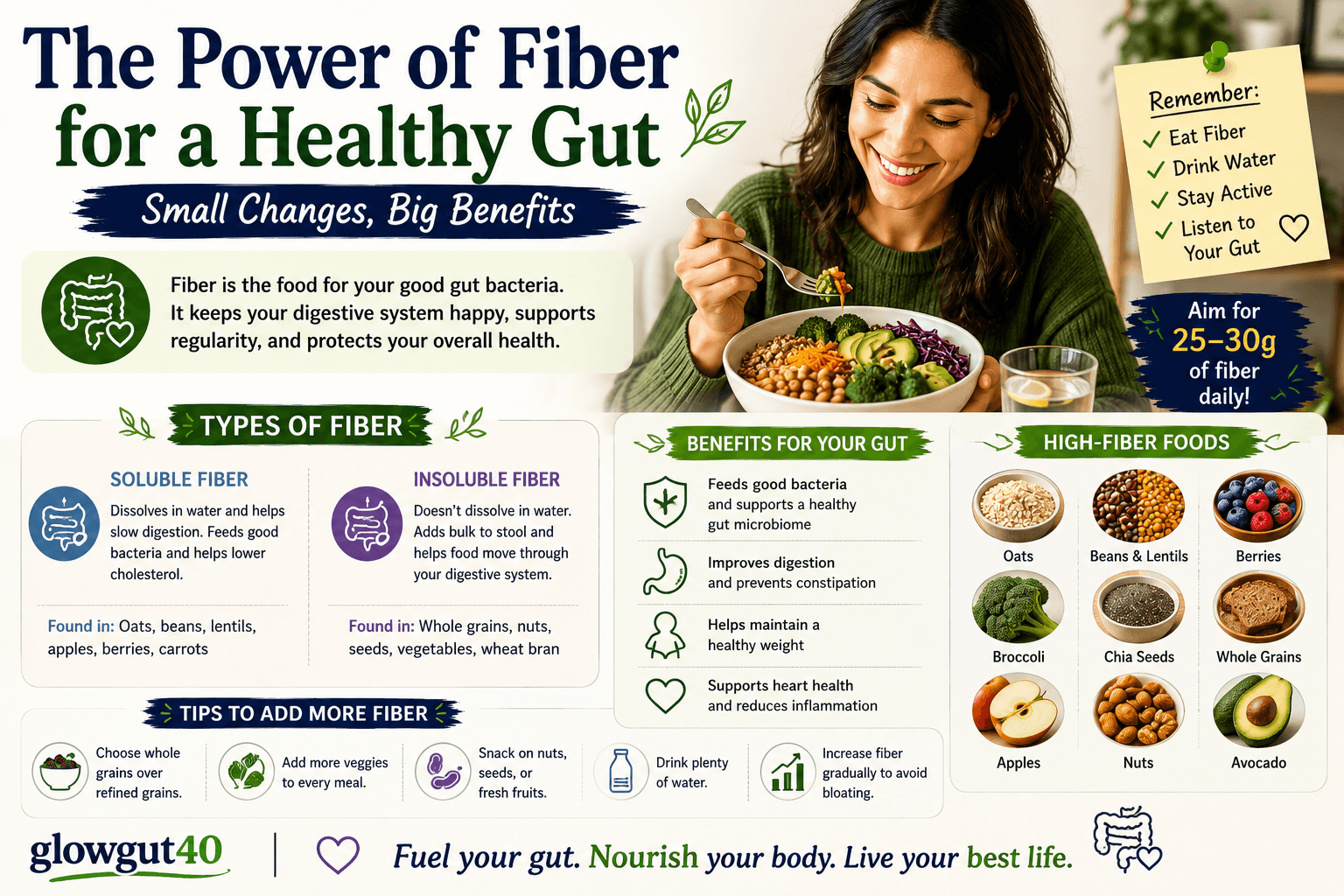
How Much Fiber Do You Really Need Per Day? The Answer Will Surprise You — And Change How You Eat
Most Americans eat less than half the fiber they need. Here’s the science-backed answer, why it matters more after 40, and exactly how to hit your daily goal without overhauling your diet.
Illustration: Most Americans eat less than half the recommended daily fiber — women over 40 are especially at risk
“If there is one single dietary change that would most dramatically improve the health of the average American, it would be doubling their fiber intake.”
That quote reflects the scientific consensus — and the numbers back it up completely. According to the FDA, the average American eats only 10–15 grams of fiber per day. The recommended daily intake is 25–38 grams. That’s a deficit of more than 20 grams every single day — and it’s silently affecting millions of people’s gut health, weight, energy, mood, and long-term disease risk.
Here’s what makes this so significant: fiber is not just a digestive aid. It is the primary fuel source for the beneficial bacteria in your gut — the microorganisms that regulate your immune system, produce your mood hormones, control inflammation, and determine how efficiently your body burns fat. Without adequate fiber, these bacteria starve. And when they starve, every system in your body suffers.
In this guide, we’ll answer exactly how much fiber you need per day, explain what different types of fiber do, share the top 20 high-fiber foods with exact gram counts, and give you a simple, gradual plan to hit your daily goal — without dramatic dietary overhauls or expensive supplements.
How Much Fiber Do You Actually Need Per Day?
The official guidelines, established by the FDA and supported by the American Heart Association and Academy of Nutrition and Dietetics, are clear:
These are minimum targets. Research from the American Gut Project found that people who consumed 30+ different plant foods per week — which naturally translates to higher fiber intake — had significantly more diverse gut microbiomes and better health outcomes across multiple markers. Diversity of fiber sources matters as much as total quantity.
Why Fiber Is the Single Most Important Nutrient for Gut Health
Fiber’s role in gut health goes far beyond keeping you “regular.” Here’s what fiber actually does inside your digestive system — and why its absence causes such widespread problems:
Illustration: Fiber → bacteria fermentation → SCFA production → gut health and whole-body benefits
Fiber Feeds Your Gut Bacteria
Your gut microbiome cannot survive without fiber. Beneficial bacteria — particularly Bifidobacterium and Lactobacillus — ferment dietary fiber to survive and multiply. Without adequate fiber, these populations decline rapidly, creating the conditions for dysbiosis, inflammation, leaky gut, and the cascade of health problems that follows.
Fiber Produces Butyrate — Your Gut’s Repair Compound
When gut bacteria ferment fiber, they produce short-chain fatty acids — most importantly butyrate. Butyrate is the primary fuel source for colonocytes (the cells lining your gut wall). It repairs the gut lining, reduces intestinal inflammation, improves insulin sensitivity, and activates fat-burning genes. No fiber = no butyrate = gut lining literally starves.
Fiber Slows Sugar Absorption
Soluble fiber forms a gel in the digestive tract that slows the absorption of glucose into the bloodstream. This reduces post-meal blood sugar spikes — one of the primary drivers of gut inflammation, weight gain, and insulin resistance.
Fiber Moves Food Through Your Gut
Insoluble fiber adds bulk to stool and speeds transit time through the colon. This reduces the time that harmful compounds spend in contact with the gut lining and significantly lowers colorectal cancer risk — the American Cancer Society directly links low fiber intake to elevated colorectal cancer risk.
Soluble vs Insoluble Fiber: What’s the Difference?
Not all fiber is the same. Understanding the two main types helps you choose the right foods for your specific gut health goals:
Soluble fiber dissolves in water to form a thick gel in the digestive tract. This gel slows digestion, feeds beneficial bacteria (acting as a prebiotic), lowers LDL cholesterol, stabilizes blood sugar, and produces the most butyrate of any fiber type.
Best food sources: Oats (beta-glucan), apples (pectin), beans and lentils, chia seeds, flaxseed, psyllium husk, sweet potatoes, and bananas.
Best for: Blood sugar control, cholesterol reduction, gut bacteria diversity, and reducing gut inflammation.
🌾 Oats have the best soluble fiber (beta-glucan) 🫘 Beans deliver both soluble + resistant starchInsoluble fiber passes through the digestive system largely intact, adding bulk to stool and speeding transit time through the colon. It acts as a natural laxative, prevents constipation, and reduces the risk of colorectal cancer by minimizing the time harmful compounds spend in contact with the gut lining.
Best food sources: Whole wheat, vegetables (especially broccoli, carrots, and leafy greens), nuts, seeds, and the skins of fruits and vegetables.
Best for: Constipation prevention, colon health, and regularity.
🥦 Broccoli skins are insoluble fiber powerhouses ⚠️ Increase slowly — too much too fast causes bloatingResistant starch is a type of starch that “resists” digestion in the small intestine and reaches the large intestine intact — where it acts as an exceptional prebiotic fiber. It is one of the most powerful butyrate-producing compounds available through food.
Best food sources: Cooked-and-cooled rice and potatoes, green (slightly unripe) bananas, lentils, oats, and cooked-and-cooled pasta.
Tip: Cooking and then cooling rice or potatoes significantly increases their resistant starch content — this is why meal-prepped rice is actually better for your gut than freshly cooked rice.
🍚 Cooled rice has 3x more resistant starch than fresh 🍌 Green bananas — nature’s best resistant starch sourceWhat Happens When You Finally Eat Enough Fiber
The benefits of hitting your daily fiber target are not subtle — they are dramatic, measurable, and felt across multiple body systems. Here’s what research shows happens when Americans increase their fiber intake to recommended levels:
- ✅ Gut microbiome diversity increases within 2 weeks — directly improving immunity, mood, and metabolism
- ✅ Bloating and gas reduce as beneficial bacteria stabilize and harmful gas-producing bacteria decline
- ✅ Belly fat decreases — butyrate activates fat-burning genes and improves insulin sensitivity
- ✅ Blood sugar stabilizes — soluble fiber reduces post-meal glucose spikes by up to 30%
- ✅ LDL cholesterol drops — beta-glucan from oats is FDA-approved for cholesterol reduction
- ✅ Mood improves — more fiber = more gut bacteria = more serotonin production
- ✅ Skin clears — reduced gut inflammation means less systemic inflammation reaching the skin
- ✅ Risk of type 2 diabetes drops by 30% — confirmed by multiple large-scale studies including NIH research
Signs You’re Not Getting Enough Fiber
Many people don’t realize their gut health problems stem from fiber deficiency. These are the most telling signs:
If you experience 3 or more of these regularly, increasing dietary fiber is likely one of the highest-impact changes you can make. Take our free Gut Score Calculator →
Top 20 High-Fiber Foods — With Exact Gram Counts
Here are the 20 highest-fiber foods available at any US grocery store, with exact fiber content per standard serving so you can easily plan your daily intake:
| Food | Serving Size | Fiber (g) | Level |
|---|---|---|---|
| 🫘 Navy Beans (cooked) | 1 cup | 19g | HIGHEST |
| 🫘 Black Beans (cooked) | 1 cup | 15g | HIGHEST |
| 🫘 Lentils (cooked) | 1 cup | 15.6g | HIGHEST |
| 🫘 Split Peas (cooked) | 1 cup | 16g | HIGHEST |
| 🌾 Chia Seeds | 2 tbsp (28g) | 10g | HIGHEST |
| 🥑 Avocado | 1 medium | 10g | HIGHEST |
| 🌾 Oats (dry rolled) | ½ cup | 8g | HIGH |
| 🌱 Flaxseed (ground) | 3 tbsp | 8g | HIGH |
| 🍇 Edamame (cooked) | 1 cup | 8g | HIGH |
| 🥦 Broccoli (cooked) | 1 cup | 5g | HIGH |
| 🍠 Sweet Potato (medium) | 1 medium | 4g | HIGH |
| 🍎 Apple (with skin) | 1 medium | 4.5g | HIGH |
| 🍌 Banana | 1 medium | 3g | GOOD |
| 🌾 Brown Rice (cooked) | 1 cup | 3.5g | GOOD |
| 🥕 Carrots (raw) | 1 cup chopped | 3.6g | GOOD |
| 🍓 Raspberries | 1 cup | 8g | HIGH |
| 🫐 Blueberries | 1 cup | 3.6g | GOOD |
| 🌰 Almonds | ¼ cup (23g) | 3.5g | GOOD |
| 🥬 Spinach (cooked) | 1 cup | 4.3g | GOOD |
| 🌾 Whole Wheat Bread | 2 slices | 4g | GOOD |
How to Reach Your Daily Fiber Goal — Step by Step
The biggest mistake people make is trying to jump from 12g to 30g overnight. This causes significant bloating and gas — which sends most people back to their old habits. The key is gradual, strategic increase:
Add Oats to Breakfast Every Day (+8g)
Switch your breakfast to ½ cup of rolled oats cooked in water or plant milk. Add a banana (+3g) and a tablespoon of ground flaxseed (+2.7g). This single breakfast swap adds ~13g of fiber and immediately begins feeding beneficial gut bacteria.
Add Beans or Lentils to Lunch 3x Per Week (+5g avg)
Add ½ cup of black beans to your lunch salad, grain bowl, or soup 3 times per week. Beans are the most fiber-dense affordable food in any US grocery store. A can of black beans costs under $1 and delivers 15g of fiber per cup.
Add 2 Vegetable Servings to Dinner (+4–6g)
Double the vegetables at dinner. Add broccoli, spinach, or sweet potato as a side dish to whatever you’re already making. Roast a tray of mixed vegetables on Sunday and use them throughout the week — effortless and delicious.
Switch Snacks to Fiber-Rich Options (+4–6g)
Replace processed snacks with: an apple + almond butter, a handful of raspberries, or whole grain crackers with avocado. These swaps add 4–6g of fiber per snack while eliminating the refined sugar and additives that destroy your gut bacteria.
Maintain and Diversify Your Sources
By week 4–5, you should be consistently hitting 25–30g of fiber daily. Now focus on diversity — rotate different beans, try new vegetables, add chia seeds to yogurt, experiment with lentil soups. The American Gut Project showed that diversity of fiber sources is just as important as total quantity for microbiome health.
🧮 How Is Your Gut Health Right Now?
Take the free GlowGut40 Gut Score Calculator — find out your personal gut health score in 2 minutes. Check My Gut Score Free →Why Fiber Matters Even More After 40
For women over 40, fiber takes on additional significance that goes beyond general gut health:
🔄 Hormonal Changes and Fiber
During perimenopause and menopause, declining estrogen directly affects the gut microbiome. Research published in Menopause journal found that women transitioning through menopause experienced significant reductions in gut microbiome diversity — and that adequate fiber intake was one of the strongest dietary predictors of maintaining that diversity.
⚖️ Weight Management After 40
Metabolic rate naturally slows after 40. Fiber is one of the most powerful tools for weight management — not because it reduces calories directly, but because it feeds the bacteria that produce SCFAs, which activate fat-burning genes and improve insulin sensitivity. Women who maintain high fiber intake after 40 consistently show better weight management outcomes.
🦴 Bone Health Connection
Emerging research from the NIH suggests that certain soluble fibers — particularly inulin — improve calcium absorption in the gut. Since calcium is critical for bone health during and after menopause, adequate fiber intake has implications for osteoporosis prevention as well.
❤️ Cardiovascular Protection
Heart disease risk increases significantly for women after menopause. Beta-glucan fiber from oats has an FDA-approved health claim for reducing LDL cholesterol — one of the primary cardiovascular risk factors. Three grams of beta-glucan daily (found in approximately 1.5 cups of cooked oatmeal) is the clinically effective dose.
Can You Eat Too Much Fiber?
In theory, yes — but it’s extremely rare. Most Americans are nowhere near over-consuming fiber. The upper limit where problems typically emerge is around 70g per day, which would require eating an extraordinary amount of high-fiber food.
The more common issue is increasing fiber too rapidly. Going from 12g to 30g in a single day will cause significant bloating, gas, and potentially loose stools — not because fiber is harmful, but because your gut bacteria need time to adapt to the new substrate.
People with IBS, SIBO, or certain digestive conditions may need to be more careful with specific types of fiber (particularly FODMAPs). If you have a diagnosed digestive condition, consult a registered dietitian before significantly increasing fiber intake.
⚠️ Common Fiber Mistakes to Avoid
The single most common mistake. Jumping from low to high fiber too quickly causes painful bloating and gas that makes people give up. Increase by 5g per week maximum and drink extra water throughout the transition.
Psyllium husk and other fiber supplements have their place — but they deliver isolated fiber without the polyphenols, vitamins, minerals, and resistant starch that come with whole food sources. Whole food fiber is far more beneficial for microbiome diversity. Use supplements to fill gaps, not as your primary source.
Fiber — especially soluble fiber — absorbs water as it moves through your gut. If you increase fiber without increasing water intake, the fiber can slow transit time and actually worsen constipation. Aim for at least 8 glasses of water per day when increasing fiber.
Eating only oats and broccoli every day provides less microbiome benefit than rotating 10–15 different plant fiber sources throughout the week. Each fiber type feeds different bacterial species. Diversity of fiber sources = diversity of gut bacteria = better health outcomes.
Many “high-fiber” packaged products — bars, cereals, breads — use isolated fiber additives like chicory root or inulin in amounts that can cause significant digestive distress. They also come with sugar, refined oils, and artificial additives that undermine gut health. Real food fiber is always superior.
❓ Frequently Asked Questions
The FDA recommends a minimum of 21g per day for women over 50, but many gut health experts — including those at Harvard Medical School — recommend 25–30g as a more effective therapeutic target for women in their 40s and 50s. This higher target better supports gut microbiome diversity, metabolic health, and hormonal balance during perimenopause and menopause. Focus on whole food sources rather than supplements.
Consistently low fiber intake leads to: reduced gut microbiome diversity, decreased butyrate production (gut lining deterioration), chronic constipation, increased gut inflammation, higher risk of type 2 diabetes and cardiovascular disease, and difficulty managing weight. The NIH links chronic low fiber intake to increased all-cause mortality risk — it is one of the most impactful and correctable dietary factors in long-term health.
The three fastest practical additions: (1) Switch breakfast to oatmeal with chia seeds and banana — adds 13–15g in one meal. (2) Add ½ cup of beans or lentils to lunch — adds 7–8g. (3) Add a large portion of vegetables to dinner — adds 4–6g. These three changes alone can take most people from 12g to 25–30g per day within one week, while increasing water intake to manage the transition.
Both are essential — they serve different purposes and should be eaten together. Soluble fiber (oats, beans, apples) is more important for gut bacteria diversity, SCFA production, blood sugar control, and cholesterol reduction. Insoluble fiber (vegetables, whole grains, nuts) is critical for bowel regularity, colon health, and colorectal cancer prevention. A whole-food diet naturally provides both types — which is one more reason whole foods are superior to isolated fiber supplements.
Yes — through multiple mechanisms. Soluble fiber increases satiety (you feel fuller longer), reduces post-meal blood sugar spikes that trigger fat storage, feeds bacteria that produce butyrate (which activates fat-burning genes), and improves insulin sensitivity. A 2019 study in the Annals of Internal Medicine found that simply increasing fiber intake to 30g per day without any other dietary changes produced meaningful weight loss and metabolic improvements in overweight adults. Read more: How Gut Health Affects Belly Fat →
No — if you’re consistently hitting 25–30g of fiber daily from whole foods, there is no need for supplementation. Whole food fiber comes packaged with polyphenols, vitamins, minerals, and resistant starch that supplements cannot replicate. Fiber supplements like psyllium husk are useful for people who struggle to get adequate fiber through diet alone — such as when traveling, during illness recovery, or managing specific digestive conditions. Always prioritize whole food sources first.
Final Thoughts: Fiber Is the Foundation of Everything
If there is one dietary change that delivers the most comprehensive gut health benefits for the least effort and cost, it is increasing fiber intake to the recommended daily target. Not a supplement. Not a superfood powder. Not an expensive probiotic. Just more beans, oats, vegetables, fruit, and whole grains — eaten consistently, every day.
The bacteria in your gut have been waiting for this. They exist to ferment fiber. They produce butyrate from fiber. They build a resilient gut lining from fiber. They manufacture your mood hormones, regulate your immune system, and protect your metabolic health — all powered by dietary fiber.
Start with one change this week. Add oats to breakfast. Add lentils to lunch. Take it gradually — 5 extra grams per week. Your microbiome will respond, your gut will heal, and within weeks you’ll feel the difference in your energy, your digestion, your skin, and your mood.
Fiber is not complicated. It is not expensive. It is just plants. And plants are exactly what your gut has been asking for.
Ready to Transform Your Gut Health Through Food?
Explore more science-backed nutrition and gut health guides on GlowGut40 — designed for women who want real results.
