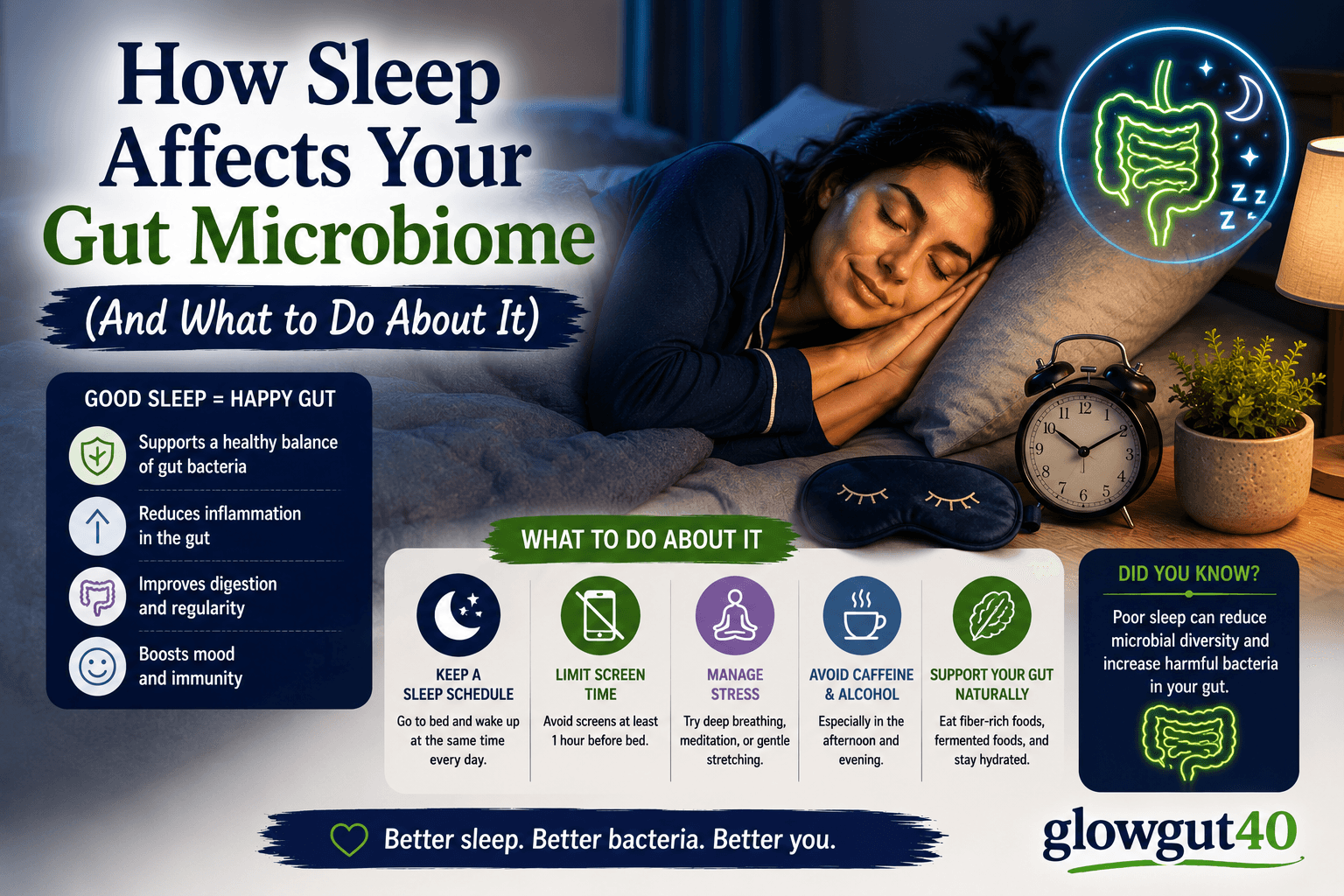
How Sleep Affects Your Gut Microbiome The Sleep-Gut Connection That Changes Everything About How You Rest
Every night of poor sleep is silently reshaping your gut bacteria — affecting your weight, immunity, mood, and energy. Here’s the science and the fix.
Illustration: Poor sleep vs. good sleep — how each shapes your gut microbiome every single night
“You can eat perfectly, exercise daily, and take every supplement in the guide — but if you’re sleeping 5 hours a night, your gut is quietly unraveling every single night.”
Most people think of sleep as rest. Scientists increasingly understand it as something far more active — a critical biological maintenance window during which the gut microbiome undergoes repair, regeneration, and rebalancing.
Here’s the number that puts this in sharp focus: 1 in 3 American adults does not get enough sleep, according to the CDC. That’s over 80 million people whose gut microbiomes are being degraded — night after night — by insufficient sleep. And most of them have no idea the two are connected.
The relationship between sleep and gut health is bidirectional — poor sleep damages the gut, and an unhealthy gut disrupts sleep. Once this cycle begins, both problems reinforce each other, creating a downward spiral that affects immunity, weight, mood, skin, and cognitive function simultaneously.
Your Gut Has Its Own Circadian Clock
Here’s something most people don’t know: your gut microbiome follows a 24-hour circadian rhythm — a biological clock that determines when different bacterial populations are most active, when gut repair occurs, and when the gut lining regenerates its protective mucus layer.
Research published in Cell by the Weizmann Institute found that gut bacteria populations fluctuate dramatically throughout the day and night — with specific bacterial species peaking during active hours and others during rest periods. This rhythmic activity is not random — it is precisely timed to coincide with the body’s own circadian cycles, supporting digestion during the day and repair during the night.
When sleep is disrupted — whether by late nights, irregular schedules, or short duration — this microbial rhythm is thrown off. Bacteria that should be active at night (repairing the gut lining, producing repair compounds) remain suppressed. Bacteria that should be dormant become active at the wrong times, producing inflammatory compounds that cascade through the body.
Illustration: Your gut microbiome follows a 24-hour circadian rhythm — repair happens primarily at night
The practical implication is significant: consistent sleep timing matters as much as sleep duration. Going to bed at wildly different times each night — even if total hours are adequate — disrupts microbial timing enough to produce measurable gut health consequences. The gut thrives on routine.
5 Ways Poor Sleep Directly Damages Your Gut
😰 Cortisol Surge Destroys Tight Junctions
Poor sleep triggers a significant cortisol surge — often beginning within the first hour of waking after insufficient rest. Cortisol, the primary stress hormone, directly disrupts the tight junction proteins (occludin, claudin, ZO-1) that keep the gut wall sealed. Within 24–48 hours of sleep deprivation, measurably elevated gut permeability (leaky gut) can be detected. This cortisol-driven leaky gut then releases LPS toxins into the bloodstream — driving systemic inflammation that worsens sleep further.
🦠 Beneficial Bacteria Populations Decline
A 2019 study published in Sleep found that just two nights of sleep restriction (4 hours per night) significantly reduced populations of Bifidobacterium and Lactobacillus — two of the most critical beneficial gut bacteria — while increasing pro-inflammatory Proteobacteria. The shift happened within 48 hours and was partially reversible with recovery sleep — but full restoration took over a week. Every night of poor sleep represents a meaningful, cumulative loss of gut microbiome diversity.
🍬 Ghrelin Spikes Drive Gut-Damaging Cravings
Sleep deprivation significantly elevates ghrelin (hunger hormone) and suppresses leptin (fullness hormone). The result is intense cravings — specifically for refined sugar, processed carbs, and high-fat foods — the exact foods that most rapidly damage gut bacteria. Columbia University research found that sleep-deprived individuals consumed an average of 300 extra calories per day, predominantly from sugar and refined carbohydrates, creating a direct pathway from poor sleep to gut dysbiosis through dietary change.
🔥 Gut Lining Repair Window Is Missed
The gut lining — which replaces itself completely every 3–5 days — does most of its repair work during deep sleep stages (slow-wave sleep). During deep sleep, growth hormone is released, anti-inflammatory cytokines increase, and gut epithelial cell regeneration accelerates. When deep sleep is cut short or disrupted, this repair window is partially or fully missed. Over weeks and months of chronic poor sleep, the cumulative repair deficit produces measurably thinner gut lining, reduced mucus production, and progressively worsening gut barrier function.
📉 SCFA Production Drops Overnight
Short-chain fatty acids (SCFAs) — butyrate, propionate, and acetate — are primarily produced by gut bacteria during nighttime fermentation of dietary fiber. This overnight SCFA production fuels gut lining cells for the following day, reduces inflammation, and activates fat-burning genes. When sleep is disrupted, the bacterial activity that generates SCFAs is suppressed. Less SCFA production means a less-fueled gut lining, more inflammation, and reduced metabolic efficiency the following day.
How Your Gut Affects Sleep Quality — The Other Direction
The sleep-gut relationship runs both ways — and understanding the gut-to-sleep direction is just as important for breaking the cycle.
🧪 95% of Serotonin Is Made in Your Gut
Serotonin — the precursor to melatonin (your sleep hormone) — is produced primarily in the gut by enterochromaffin cells. When gut dysbiosis disrupts serotonin production, melatonin levels fall. The result: difficulty falling asleep, lighter sleep stages, and more frequent nighttime awakening. This is why people who heal their gut often report dramatically improved sleep quality within weeks — even before making any other sleep-specific changes.
🦠 Specific Gut Bacteria Produce GABA
GABA (gamma-aminobutyric acid) — your brain’s primary calming neurotransmitter — is produced in part by specific gut bacteria, including Lactobacillus rhamnosus. Low gut microbiome diversity means less GABA production, which directly contributes to racing thoughts, difficulty relaxing at bedtime, and light, fragmented sleep. A 2019 study confirmed that increasing Lactobacillus populations through fermented food consumption produced measurable improvements in sleep quality within 4 weeks.
🔥 Gut Inflammation Activates the Brain at Night
Inflammatory cytokines produced by a dysbiotic gut cross the blood-brain barrier and activate the brain’s threat-detection centers — keeping the nervous system in a low-level alert state that prevents deep, restorative sleep. This is why people with IBS, leaky gut, and chronic gut inflammation so consistently report insomnia and non-restorative sleep. The inflamed gut is quite literally keeping the brain awake.
Why This Matters More for Women Over 40
The sleep-gut connection becomes especially significant for women navigating perimenopause and menopause — for two interconnected reasons.
First, sleep disruption during perimenopause is extremely common — hot flashes, night sweats, and hormonal fluctuations interrupt sleep quality for up to 61% of perimenopausal women according to the North American Menopause Society. Each disrupted night is a night of missed gut repair, reduced SCFA production, and declining microbiome diversity.
Second, declining estrogen during perimenopause directly affects the gut microbiome — reducing populations of Lactobacillus species that maintain gut lining integrity, produce serotonin precursors, and regulate the gut immune response. When sleep disruption compounds this hormonal gut microbiome decline, the cumulative effect on gut health, weight management, mood, and immunity is significantly amplified.
For women over 40, protecting sleep quality is not a luxury — it is one of the highest-leverage health interventions available, with direct benefits for the gut, hormonal balance, metabolic health, and cognitive function simultaneously.
Signs Your Sleep Is Damaging Your Gut Right Now
- 😴 You wake up tired despite 7+ hours in bed — non-restorative sleep is often gut-inflammation driven
- 🍬 Intense sugar cravings in the morning — elevated ghrelin from poor sleep driving gut-damaging food choices
- 🫧 More bloating than usual after nights of poor sleep — disrupted microbial rhythm causing improper fermentation
- 😤 Mood is worse after bad nights — cortisol spike from poor sleep → gut inflammation → reduced serotonin
- 🧠 Brain fog is worse on sleep-deprived days — gut-driven neuroinflammation amplified by poor sleep
- 🤒 You get sick more often — poor sleep depletes gut-based immune populations within days
- ⚖️ Weight goes up during periods of poor sleep — cortisol-driven belly fat storage + microbiome dysbiosis
How to Fix the Sleep-Gut Cycle — Step by Step
Breaking the sleep-gut cycle requires addressing both sides simultaneously. Here are the most effective interventions:
Keep the Same Bedtime Every Night — Including Weekends
Your gut microbiome runs on a circadian rhythm. Irregular sleep timing — even if total hours are adequate — disrupts microbial schedules. Set a consistent bedtime and wake time 7 days a week. This single habit produces measurable microbiome improvements within 2–3 weeks without any dietary changes.
No Screens 60 Minutes Before Bed
Blue light from phones and screens suppresses melatonin production — your primary sleep hormone. Since melatonin is derived from serotonin (which is gut-produced), suppressing melatonin affects the entire gut-sleep hormonal cascade. Replace screen time with reading, stretching, or the 4-7-8 breathing technique to activate the vagus nerve and signal rest to both the brain and gut.
Eat Your Last Meal 3 Hours Before Sleep
Late eating activates digestive processes that compete with gut repair. The gut’s repair and microbial reset work is triggered by the fasting state — so eating close to bedtime delays the start of the overnight gut healing window. A 12-hour eating window (e.g., 8am–8pm) maximizes the overnight gut repair period and has been shown to improve both sleep quality and microbiome diversity.
Keep Your Bedroom Cool (65–68°F)
Body temperature drop is one of the primary triggers for deep sleep onset — and deep sleep is when the most intensive gut repair occurs. A cooler bedroom (65–68°F / 18–20°C) facilitates the temperature drop needed to enter and maintain deep sleep stages. Research from the NIH shows that optimal bedroom temperature is one of the most underutilized sleep quality improvements available.
Rebuild Your Microbiome to Improve Sleep Quality
Since gut bacteria produce serotonin (the melatonin precursor) and GABA (the relaxation neurotransmitter), rebuilding gut microbiome diversity directly improves sleep quality from the inside. Add kefir or plain yogurt daily, eat 25–30g of fiber from diverse sources, and consider a multi-strain probiotic containing Lactobacillus rhamnosus and Bifidobacterium longum — both specifically studied for sleep improvement. See: Best Gut Health Supplements →
Manage Evening Stress — Cortisol Is the Enemy
Evening cortisol elevation is one of the most common causes of difficulty falling asleep — and it directly damages gut tight junctions as described above. A 10-minute evening walk, 5 minutes of 4-7-8 breathing, or a brief journaling session measurably reduces evening cortisol and improves sleep onset. Consistent stress management in the evening benefits both sleep quality and gut health simultaneously.
🧮 Is Poor Sleep Affecting Your Gut Health?
Take the free GlowGut40 Gut Score Calculator — find out your gut health score in 2 minutes. Check My Gut Score Free →🥛 Foods That Improve Both Sleep and Gut Health Simultaneously
These foods contain compounds that benefit both gut microbiome health and sleep quality — making them the perfect evening food choices:
Probiotic + tryptophan → serotonin → melatonin. Best drunk in the evening.
Prebiotic fiber + magnesium + tryptophan. Natural sleep and gut supporter.
Prebiotic fiber + melatonin content. One of few foods that contains melatonin directly.
Highest natural melatonin content of any food. Tart cherry juice before bed improves sleep duration.
Apigenin binds GABA receptors (calming) + reduces gut inflammation. Perfect evening drink.
Omega-3 + vitamin D + tryptophan — three sleep-supporting compounds in one food.
Magnesium promotes muscle relaxation + melatonin. A small handful before bed is effective.
Glycine promotes deep sleep directly + heals gut lining overnight. A cup before bed is ideal.
🌙 The Ideal Evening Gut-Sleep Routine
Here is a practical evening routine that simultaneously optimizes sleep quality and gut repair — designed to take less than 30 minutes total:
🍽️ Last meal — include tryptophan-rich food (salmon, eggs, oats) + fermented food (kefir or kimchi)
🚶 10-minute walk — reduces post-meal blood sugar, lowers cortisol, activates vagus nerve
📵 Screens off — switch to reading, light stretching, or journaling
🌿 Chamomile tea or warm bone broth — GABA activation + gut repair primer
🫁 4-7-8 breathing (5 cycles) — activates vagus nerve, signals gut to begin repair mode
😴 Sleep — gut repair window opens. Deep sleep activates gut lining regeneration and SCFA production
☀️ Wake — 8 hours of gut repair complete. Microbiome reset. Ready for the day.
⚠️ Common Sleep-Gut Mistakes to Avoid
Late-night sugar feeds pro-inflammatory gut bacteria exactly when beneficial bacteria should be taking over for overnight repair. It delays the onset of the gut’s repair window and feeds the microbes that produce compounds keeping the brain alert — directly worsening sleep quality.
Alcohol may help with sleep onset, but it dramatically suppresses deep sleep (slow-wave sleep) — exactly the stage when gut repair occurs. It also increases gut permeability within hours and disrupts microbiome composition. The net effect on gut health is severely negative, even when alcohol “improves” sleep onset.
Social jet lag — sleeping significantly later on weekends than weekdays — disrupts the gut microbiome’s circadian rhythm just as effectively as actual jet lag. The Weizmann Institute research showed this pattern consistently correlated with reduced microbiome diversity and increased metabolic inflammation. Consistent timing is more important than total hours.
Phone use in bed combines blue light (melatonin suppression), mental stimulation (cortisol elevation), and social media stress (further cortisol) — a triple gut-damaging combination right before the gut’s repair window. Replace with 5 minutes of gentle stretching or breathing and the gut benefits are immediate.
If an inflamed, dysbiotic gut is producing inflammatory cytokines that activate the brain at night, improving sleep hygiene alone will produce only partial results. The most effective approach addresses both simultaneously — improving sleep habits while actively healing the gut through diet, fermented foods, and targeted nutrition.
❓ Frequently Asked Questions
Poor sleep disrupts gut bacteria through five documented pathways: elevated cortisol damages tight junction proteins (causing leaky gut), beneficial bacteria populations decline within 48 hours, ghrelin spikes drive cravings for gut-damaging sugar, the gut lining repair window (which occurs during deep sleep) is missed, and SCFA production drops overnight. Research confirms these changes can occur after just two consecutive nights of inadequate sleep — making consistent quality sleep one of the most important gut health interventions available.
Yes — through multiple mechanisms. The gut produces 95% of the body’s serotonin (the melatonin precursor), produces GABA (the primary calming neurotransmitter), and regulates the inflammatory cytokines that can keep the brain activated at night. Multiple clinical studies have confirmed that probiotic supplementation and gut-healing diets produce measurable improvements in sleep onset time, sleep duration, and sleep quality — even without other sleep-specific interventions. Healing the gut is one of the most underutilized sleep improvement strategies available.
The NIH and CDC recommend 7–9 hours for adults. For gut health specifically, research suggests that the quality of sleep — particularly the amount of slow-wave (deep) sleep — may matter as much as total duration. Deep sleep is when the majority of gut lining repair and microbial reset occurs. Practices that increase deep sleep (consistent timing, cool bedroom, no alcohol, evening relaxation routine) may benefit gut health even when total hours stay the same.
Yes — directly. Serotonin (produced in 95% by gut enterochromaffin cells) is the precursor from which melatonin is synthesized in the pineal gland. When gut dysbiosis reduces serotonin production, the body has less raw material to convert to melatonin. This creates a direct biochemical pathway from gut dysbiosis to impaired melatonin production to poor sleep quality. Healing the gut — through fermented foods, fiber, and reduced gut inflammation — supports the serotonin production that makes adequate melatonin possible.
The best pre-bed foods for gut health and sleep quality include: a small cup of warm bone broth (glycine promotes deep sleep + heals gut lining), tart cherry juice (highest melatonin content of any food + anti-inflammatory), chamomile tea (GABA receptor binding + gut anti-inflammatory), or a small serving of kefir (probiotic + tryptophan for serotonin production). Avoid eating within 3 hours of sleep for optimal gut repair — the gut’s repair window is most effective in a fasting state.
Multiple mechanisms converge when you’re sleep deprived: cortisol increases gut permeability (more bloating, food reactions), beneficial bacteria decline within 48 hours (less digestive efficiency), ghrelin-driven cravings lead to gut-damaging food choices, and the gut lining repair window is shortened (cumulative lining deterioration). Most people who experience worse IBS, bloating, or digestive symptoms during stressful, sleep-deprived periods are experiencing all five mechanisms simultaneously — which is why prioritizing sleep often produces faster gut symptom relief than dietary changes alone.
Final Thoughts: Sleep Is Your Gut’s Most Powerful Healer
Of all the gut health interventions available — dietary changes, probiotics, supplements, stress management — sleep may be the most powerful and the most overlooked. Every night of quality sleep is a complete gut healing cycle. Every night of poor sleep is a step backward.
The gut-sleep relationship is one of the most elegant examples of how interconnected human biology is. Fix your sleep and your gut improves. Fix your gut and your sleep improves. Both paths lead to the same place — and both can be started tonight.
Set a consistent bedtime. Put your phone in another room. Eat your last meal by 8pm. Drink chamomile tea. Take 5 deep breaths. These are not dramatic interventions — but for your gut microbiome, they are the difference between a night of repair and a night of damage.
Your gut heals at night. Give it the darkness, the time, and the consistency it needs.
Start Healing Your Gut — Starting Tonight
Explore more science-backed gut health guides on GlowGut40 — your trusted home for healing from the inside out.
