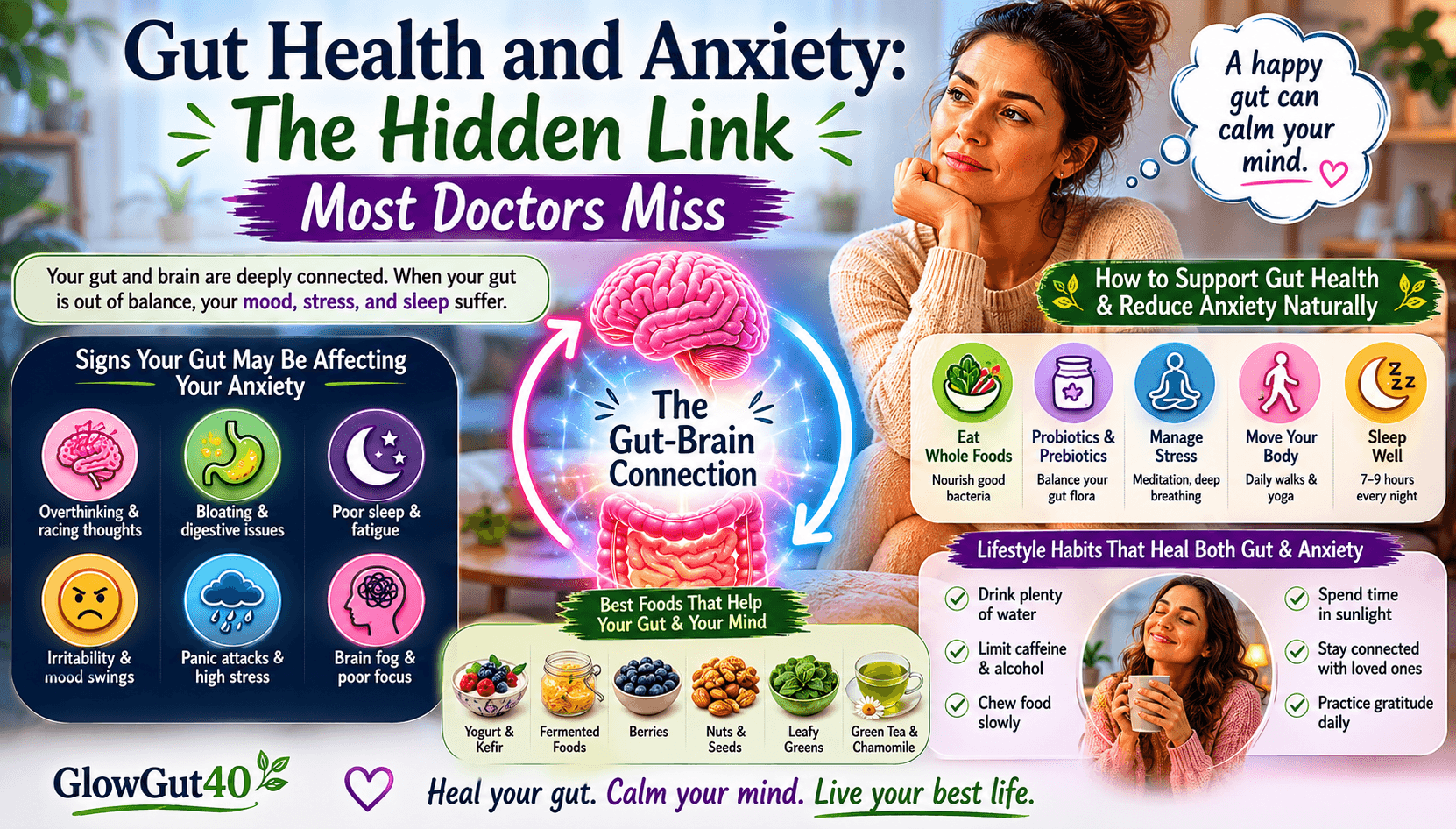
Gut Health and Anxiety: The Hidden Link Most Doctors Miss Your Anxiety May Be Starting in Your Gut — Not Your Head
Over 40 million Americans suffer from anxiety. New science reveals that the gut microbiome plays a direct, powerful role — and healing your gut may be the most overlooked anxiety treatment available.
Illustration: The gut-brain axis — anxiety is a two-way conversation between your gut and your mind
“I went to three different therapists and two psychiatrists. Nobody once asked me about my diet. When I fixed my gut, my anxiety dropped by more than half.” — A GlowGut40 reader
Anxiety disorders are the most common mental health condition in the United States. According to the Anxiety and Depression Association of America (ADAA), over 40 million American adults — nearly 20% of the population — suffer from an anxiety disorder every year. Yet the vast majority of treatment focuses entirely on the brain, ignoring a system that may be generating the anxiety in the first place.
That system is your gut.
A growing mountain of scientific evidence — from institutions including Harvard Medical School, the NIH, and Oxford University — now confirms that the gut microbiome plays a direct, powerful role in anxiety, mood regulation, and emotional resilience. In fact, some researchers have begun calling the gut the “second brain” — and for good reason.
The Gut-Brain Axis: Your Body’s Anxiety Highway
The gut and the brain are connected by a sophisticated communication network called the gut-brain axis. At the center of this network is the vagus nerve — one of the longest nerves in the human body, running from the brainstem all the way to the colon.
Here’s what makes this remarkable: approximately 80% of the signals traveling along the vagus nerve go from the gut to the brain — not the other way around. Your gut is essentially talking to your brain far more than your brain talks to your gut.
This means the state of your gut microbiome directly influences your brain’s emotional processing centers — including the amygdala, which is the brain’s anxiety and fear center.
When your gut microbiome is healthy and diverse, it sends calm, balanced signals up the vagus nerve. When it’s inflamed and imbalanced, it sends stress signals — activating your fight-or-flight response, elevating cortisol, and generating the exact neurochemical environment that anxiety thrives in.
Illustration: 80% of vagus nerve signals travel gut → brain — your gut drives your mood
The Serotonin Connection: Why Your Gut Controls Your Mood
Here is the fact that changes everything: approximately 95% of your body’s serotonin is produced in the gut — not the brain. Serotonin is the neurotransmitter most directly associated with feelings of happiness, calm, and emotional stability. It is also the primary target of most SSRI antidepressants and anti-anxiety medications.
When your gut microbiome is healthy, it produces adequate serotonin. When it’s imbalanced — through poor diet, antibiotic use, chronic stress, or lack of sleep — serotonin production drops. The result is a neurochemical environment that is inherently more anxious, more reactive, and more difficult to manage emotionally.
A 2019 landmark study published in Nature Microbiology analyzed the gut microbiomes of over 1,000 people and found that individuals with depression and anxiety consistently had lower levels of two specific gut bacteria: Coprococcus and Dialister. These bacteria are involved in producing dopamine precursors and GABA — the brain’s primary calming neurotransmitter.
Illustration: How a healthy gut microbiome directly produces the chemicals that calm anxiety
How an Unhealthy Gut Directly Causes Anxiety: 4 Mechanisms
1. Reduced Serotonin and GABA Production
When harmful bacteria outnumber beneficial bacteria in the gut, serotonin and GABA production drops. Without adequate levels of these calming neurotransmitters, the nervous system becomes hyperreactive — the biological equivalent of a car alarm that keeps going off for no reason.
2. Leaky Gut Triggers Neuroinflammation
When the gut lining is damaged (leaky gut), bacterial toxins called lipopolysaccharides (LPS) enter the bloodstream. These toxins cross the blood-brain barrier and trigger inflammation in brain tissue — a state called neuroinflammation. Neuroinflammation is now recognized as a primary driver of both anxiety and depression. Learn more: How to Heal Leaky Gut Naturally →
3. HPA Axis Dysregulation
The gut microbiome directly regulates the HPA (hypothalamic-pituitary-adrenal) axis — your body’s central stress response system. An imbalanced microbiome keeps the HPA axis in a chronically activated state, flooding the body with cortisol and adrenaline. The result is persistent anxiety that feels disproportionate to actual life circumstances.
4. Disrupted Vagus Nerve Signaling
An inflamed, unhealthy gut sends constant distress signals up the vagus nerve to the brain’s amygdala — the fear and threat-detection center. When the amygdala receives these signals repeatedly, it becomes sensitized — essentially stuck in a low-level alarm state that manifests as generalized anxiety, worry, and emotional reactivity.
Signs Your Anxiety May Be Gut-Related
Not all anxiety originates in the gut — but these specific patterns suggest your digestive system may be a major contributing factor:
- 😰 Anxiety worsens after certain meals — particularly high-sugar, processed, or gluten-heavy foods
- 🫧 Digestive symptoms (bloating, IBS) accompany anxiety episodes — the two flare up together
- 💊 Anxiety began or worsened after a course of antibiotics — microbiome disruption can trigger anxiety within weeks
- 🌙 Anxiety is worst in the morning on an empty stomach — cortisol peaks at wake-up, amplified by an inflamed gut
- 🍬 Sugar and carb cravings during anxious periods — bad gut bacteria demand feeding, amplifying emotional eating cycles
- 🧠 Anxiety is accompanied by brain fog and fatigue — classic neuroinflammation pattern from gut-derived LPS toxins
Foods That Calm Gut-Driven Anxiety
These foods directly support serotonin and GABA production, reduce neuroinflammation, and feed the beneficial bacteria that keep your nervous system calm:
Foods That Make Gut-Driven Anxiety Worse
Just as powerful as the foods that help are the foods that actively worsen gut-driven anxiety — often by spiking cortisol, disrupting the microbiome, or triggering neuroinflammation:
- ☕ Excess caffeine — elevates cortisol and adrenaline, directly mimicking the physiological experience of anxiety. Limit to 1–2 cups before noon.
- 🍬 Refined sugar — causes blood sugar spikes and crashes that trigger cortisol release and amplify anxious feelings. Also feeds gut bacteria that produce anxiety-inducing chemicals.
- 🍺 Alcohol — disrupts sleep architecture, depletes GABA, damages gut lining, and causes rebound anxiety the next day (even from moderate drinking).
- 🍟 Ultra-processed foods — emulsifiers destroy the gut microbiome’s serotonin-producing bacteria. A 2022 study found people eating the most ultra-processed food had 25% higher rates of anxiety disorders.
- 🥤 Artificial sweeteners — sucralose and aspartame alter gut bacteria in ways that disrupt neurotransmitter balance and increase inflammatory markers linked to anxiety.
6 Natural Ways to Reduce Anxiety Through Gut Health
A 2019 Oxford University study found that people who consumed prebiotic supplements for 3 weeks showed reduced attention to negative stimuli and lower cortisol upon waking — both key markers of anxiety reduction. Food-based probiotics produce even stronger effects.
Start with one daily serving of kefir, plain Greek yogurt, or kimchi. Lactobacillus rhamnosus and Bifidobacterium longum are the strains most consistently linked to anxiety reduction in clinical trials.
🥛 Kefir = highest GABA-boosting effect 🧬 L. rhamnosus = most studied for anxietyPrebiotic fiber feeds the bacteria that produce GABA and serotonin. Most Americans eat half the recommended daily fiber — creating a gut environment that is chronically low in these anxiety-calming neurotransmitters.
Aim for 25–38g of fiber daily from oats, garlic, onions, lentils, and bananas. Even a modest increase of 5–8g per day produces measurable improvements in gut microbiome diversity within 2 weeks. Read more: Probiotics vs Prebiotics Guide →
🌱 Fiber feeds GABA-producing bacteria 📈 Diversity increases in 2 weeksOmega-3 fatty acids — particularly EPA and DHA from fatty fish — are among the most well-researched natural anxiety reducers. A 2018 meta-analysis published in JAMA Network Open analyzed 19 clinical trials and found that omega-3 supplementation significantly reduced anxiety symptoms across multiple anxiety disorders.
Omega-3s work by reducing neuroinflammation, lowering cortisol, and supporting the integrity of the gut lining — tackling both the brain and gut sides of anxiety simultaneously. Aim for 2–3 servings of fatty fish weekly (salmon, sardines, mackerel).
🧠 Reduces neuroinflammation directly 📊 Supported by 19-study meta-analysisSleep deprivation is one of the most powerful anxiety amplifiers known to science. After just one night of poor sleep, the amygdala (brain’s fear center) becomes 60% more reactive to negative stimuli — according to research from UC Berkeley. Poor sleep also directly disrupts the gut microbiome, reducing the serotonin-producing bacteria your brain depends on for calm.
Prioritize 7–9 hours of consistent sleep. The most impactful change: eliminate screens 60 minutes before bed and keep your wake time consistent every day — even on weekends.
😴 60% less amygdala reactivity with good sleep 🔄 Sleep restores gut microbiome diversityChronic psychological stress actively damages the gut microbiome — creating a vicious cycle where gut imbalance causes anxiety, which causes more stress, which causes more gut damage. Breaking this cycle requires actively downregulating the stress response daily.
The most evidence-backed tools: diaphragmatic breathing (activates the vagus nerve directly), 10-minute walks in nature (reduces cortisol by 15%), and brief meditation (even 5 minutes produces measurable HPA axis calming). See: 5 Daily Gut Healing Habits →
🫁 Breathing activates vagus nerve instantly 🌿 Nature walks cut cortisol 15%Exercise is one of the most powerful natural anxiolytics (anxiety reducers) available — and it works both directly on the brain AND through the gut. Regular moderate exercise increases the gut’s production of SCFA-producing bacteria, boosts serotonin turnover, and reduces the inflammatory cytokines that drive neuroinflammation.
A 2020 Harvard Medical School review found that regular aerobic exercise reduced anxiety symptoms as effectively as medication in several clinical trials. The key word is regular — even 20–30 minutes of brisk walking, 5 days per week, produces clinically meaningful anxiety reduction.
🏃 As effective as medication (Harvard, 2020) 🦠 Boosts serotonin-producing gut bacteria🧮 Could Your Anxiety Be Coming From Your Gut?
Take the free GlowGut40 Gut Score Calculator and find out your gut health status in 2 minutes. Check My Gut Score Free →The Vagus Nerve: Your Secret Anxiety Off-Switch
If there’s one concept that ties gut health and anxiety together most powerfully, it’s the vagus nerve. And unlike your gut microbiome — which takes weeks to change — you can activate your vagus nerve in seconds.
The vagus nerve is the primary pathway through which your gut communicates with your brain. When the vagus nerve is active and healthy, it promotes what scientists call vagal tone — a state of calm, parasympathetic (rest-and-digest) nervous system dominance. High vagal tone = low anxiety. Low vagal tone = chronic anxiety, poor gut health, and elevated inflammation.
How to Activate Your Vagus Nerve Right Now
- 🫁 Slow diaphragmatic breathing — breathe in for 4 counts, out for 8. The extended exhale directly stimulates the vagus nerve within seconds.
- 🎵 Humming or singing — the vagus nerve runs through the vocal cords. Even 2 minutes of humming activates parasympathetic response.
- 🚿 Cold water on the face — triggers the dive reflex, which powerfully activates vagal tone and drops heart rate within 30 seconds.
- 🙏 Meditation and prayer — both have been shown in clinical studies to increase vagal tone and reduce anxiety over time.
- 🚶 Walking after meals — activates the gut’s enteric nervous system, which directly communicates through the vagus nerve and promotes the rest-and-digest state.
⚠️ Common Mistakes to Avoid
Anxiety can have multiple root causes — and for many people, the gut is a major one. Ignoring the gut-brain axis means missing one of the most powerful, natural levers for reducing anxiety available.
Coffee on an empty stomach spikes cortisol and directly worsens anxiety. If you’re a coffee drinker, always eat something first — especially a fiber-rich food that buffers the cortisol response.
Alcohol provides short-term GABA activation, which feels calming — but the rebound the next day (lower GABA, higher glutamate) worsens anxiety significantly. It also damages the gut lining, reducing the serotonin production that your nervous system needs.
Blood sugar drops are a powerful anxiety amplifier — triggering cortisol and adrenaline release. Eating regular, fiber-rich meals stabilizes blood sugar and provides tryptophan for ongoing serotonin production throughout the day.
Many people stop their gut health habits as soon as anxiety reduces. But the microbiome requires ongoing maintenance — probiotic bacteria are transient and must be replenished daily. Consistency is the most important factor in long-term anxiety management through gut health.
❓ Frequently Asked Questions
Yes — and this is now well-supported by science. The gut produces approximately 95% of the body’s serotonin and significant amounts of GABA — the two neurotransmitters most directly involved in anxiety regulation. Research published in Nature Microbiology found that people with anxiety consistently had lower levels of specific gut bacteria. An unhealthy gut microbiome can directly cause or significantly worsen anxiety through multiple biological pathways.
Most people begin noticing mood and anxiety improvements within 2–4 weeks of consistent dietary changes. This aligns with the timeline of microbiome diversity improvements. The Oxford University prebiotic study showed reduced anxiety markers within just 3 weeks. Full, sustained anxiety reduction typically takes 8–12 weeks of consistent gut-healing habits.
Lactobacillus rhamnosus is the most extensively studied probiotic strain for anxiety reduction. It directly regulates GABA receptors via the vagus nerve. Bifidobacterium longum is also well-studied for reducing anxiety and cortisol levels. Both are found in high-quality kefir and some probiotic supplements. For food sources, kefir contains the widest variety of anxiety-relevant bacterial strains.
Absolutely not without consulting your doctor. Never stop prescribed anxiety medication without medical supervision — doing so can be dangerous. Gut health improvements are a powerful complement to — not a replacement for — professional mental health treatment. Many people find that gut healing allows them to work more effectively with therapy or gradually reduce medication needs under medical guidance.
Both — and this is what makes the gut-anxiety connection so powerful. Stress directly damages the gut microbiome by elevating cortisol, reducing protective mucus, and disrupting tight junctions. And an unhealthy gut sends distress signals to the brain that trigger more stress and anxiety. This bidirectional relationship means that breaking the cycle from either end — reducing stress OR healing the gut — produces benefits for both systems simultaneously.
The fastest natural anxiety relief is vagus nerve activation through slow diaphragmatic breathing: inhale for 4 counts, exhale for 8 counts. Repeat for 5–10 minutes. This directly activates the parasympathetic nervous system and reduces cortisol within minutes. Cold water on the face is also extremely fast — it triggers the dive reflex and drops heart rate within 30 seconds. For longer-term relief, daily kefir or probiotic food consumption combined with fiber and regular walking produces the most sustained natural anxiety reduction.
Final Thoughts: Calm Your Mind By Healing Your Gut
For too long, anxiety has been treated as a purely psychological condition — residing entirely in the mind, requiring only mental health intervention. The science now tells a more complete story.
Your gut produces the majority of your calming neurotransmitters. It houses a nervous system of its own. It communicates with your brain far more than your brain communicates with it. And when it’s imbalanced, it sends a constant stream of anxiety-generating signals to your central nervous system — signals that no amount of willpower or positive thinking alone can quiet.
But here’s what makes this genuinely hopeful: you can change your gut microbiome. Starting today. A serving of kefir. A bowl of oats with garlic. A 20-minute walk. Five minutes of slow breathing. These aren’t just “healthy habits” — they are direct interventions into the biological root cause of anxiety for millions of Americans.
Heal your gut. Calm your mind. It’s not a metaphor. It’s science.
Start Healing Your Gut — And Calming Your Mind
Explore more science-backed guides on GlowGut40 — designed specifically for women over 40.
