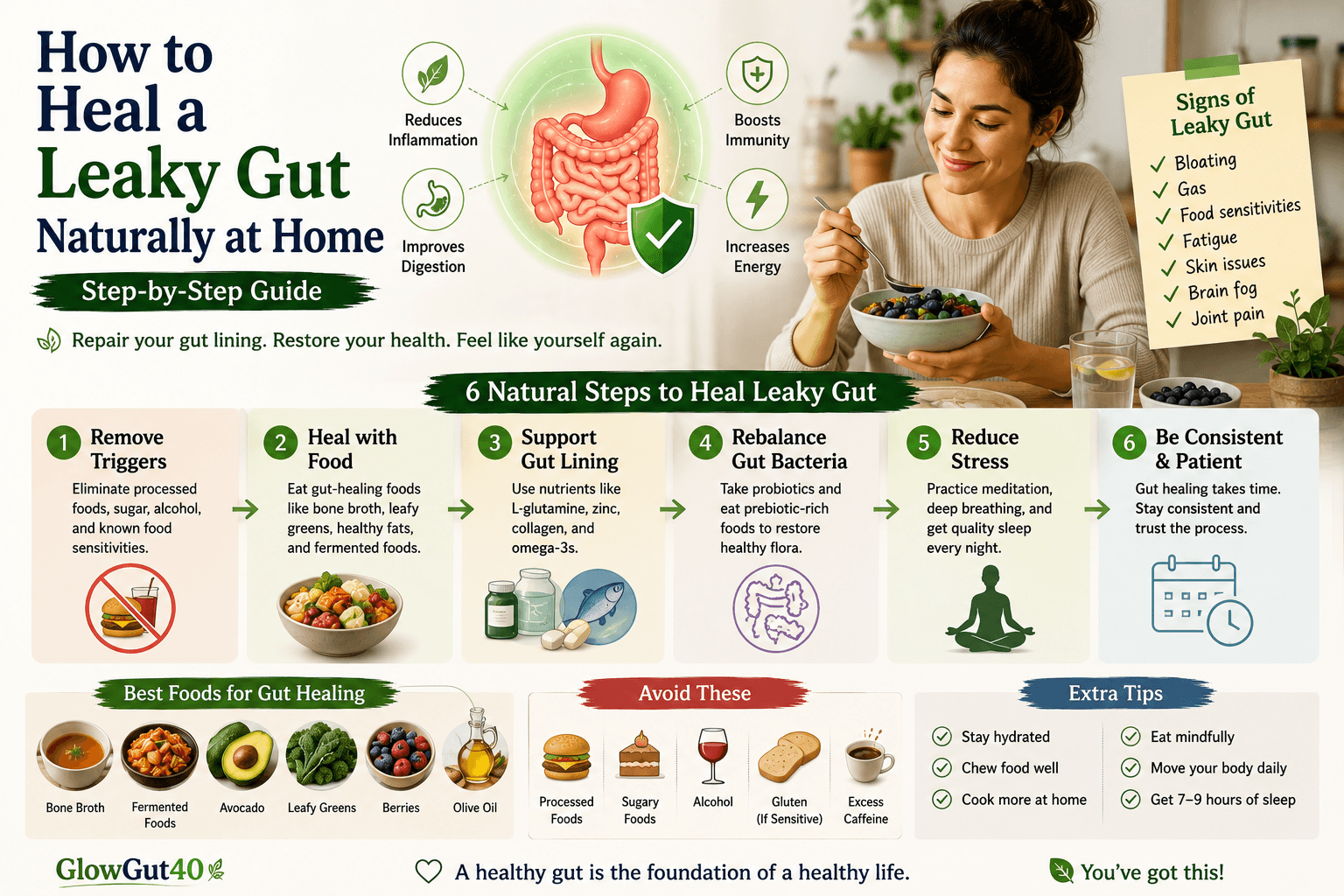
How to Heal a Leaky Gut Naturally The Complete Step-by-Step Guide That Actually Works at Home
Healing leaky gut is possible — and you can start at home today. Here is the exact protocol used by thousands of women to repair their gut lining, reduce inflammation, and reclaim their health.
Illustration: Leaky gut (damaged tight junctions) vs. healed gut (sealed wall) — your goal is the right side
“I spent three years with bloating, brain fog, fatigue, and skin breakouts — seeing specialist after specialist. Nobody looked at my gut. When I finally healed my leaky gut naturally, everything changed within 8 weeks.”
That experience is shared by millions of Americans. Leaky gut syndrome — medically known as intestinal permeability — is one of the most common and most underdiagnosed root causes of chronic health problems in the United States.
The good news is powerful: you can heal a leaky gut naturally, at home, without expensive treatments. The gut lining replaces itself completely every 3–5 days. With the right diet, lifestyle, and targeted nutrition, most people see meaningful improvements within 2–4 weeks and significant healing within 8–12 weeks.
This guide gives you the complete, step-by-step protocol — covering every dimension of leaky gut healing, from what to eat and what to avoid, to the specific supplements and lifestyle practices that make the most difference.
How Do You Know If You Have Leaky Gut?
Leaky gut rarely announces itself with one dramatic symptom. Instead, it shows up as a cluster of seemingly unrelated problems that doctors often treat separately without ever identifying the common root. The most telling signs include:
- 🫧 Chronic bloating — especially after meals, even healthy ones
- 😴 Persistent fatigue that sleep does not fix
- 🧠 Brain fog and difficulty concentrating
- 🤒 Skin problems — acne, eczema, rosacea, dull skin
- 🍞 New food sensitivities — foods that never bothered you now cause symptoms
- 😰 Anxiety, mood swings, and low-grade depression
- ⚖️ Unexplained weight gain — especially around the belly
- 🦴 Joint pain and inflammation without injury
- 🤧 Frequent illness — a weakened immune system that catches every bug
If you recognize 3 or more of these, leaky gut is a very likely contributor. Take our free Gut Score Calculator for a personalized assessment.
What Causes Leaky Gut? Understanding the Root
You cannot heal leaky gut without first understanding what caused it. In most Americans, the damage comes from a combination of these factors — working quietly over months or years:
- 🍟 Ultra-processed foods — emulsifiers like carrageenan and polysorbate-80 directly damage tight junction proteins
- 🍬 Refined sugar and alcohol — feed harmful bacteria and increase gut permeability within hours
- 💊 Antibiotics and NSAIDs — destroy beneficial bacteria and directly damage the gut lining
- 😰 Chronic stress — cortisol disrupts tight junction proteins and increases gut inflammation
- 😴 Poor sleep — reduces gut lining repair that occurs overnight during deep sleep
- 🌾 Low fiber diet — starves the bacteria that produce butyrate, the gut lining’s primary fuel
How to Heal Leaky Gut Naturally: Complete 7-Step Protocol
This is the most important step — and the one most people skip because it feels too simple. You cannot repair a wound while continuing to cut it. Every day you consume gut-damaging foods and substances, you are undoing the repair your body is trying to make overnight.
Remove these from your diet as completely as possible:
You do not need to be perfect — an 80/20 approach is sustainable. But consistent daily consumption of these items will dramatically slow or prevent healing.
❌ Sugar removal = single most impactful change ❌ Alcohol = increases permeability same dayCertain whole foods contain compounds that directly repair the gut lining, reduce intestinal inflammation, and seal tight junctions. Build your daily diet around these:
A healthy microbiome is the gut lining’s most important protector. Beneficial bacteria — particularly Lactobacillus and Bifidobacterium — produce compounds that seal tight junctions, reduce inflammatory signals, and maintain the protective mucus layer coating the gut wall.
Best probiotic foods for healing leaky gut: Kefir (most potent — up to 61 bacterial strains), plain Greek yogurt, kimchi, sauerkraut (raw, unpasteurized), miso, and kombucha.
Best prebiotic foods: Garlic, onions, oats, green bananas, lentils, asparagus, and leeks. These feed the bacteria that produce butyrate — the single most important compound for gut lining repair.
Want to understand more? Read: Probiotics vs Prebiotics: What’s the Difference? →
🥛 Kefir daily = most powerful probiotic food 🌾 Oats = best prebiotic for butyrate productionWhile food is always the foundation, these specific supplements have the strongest clinical evidence for directly repairing intestinal permeability and should be considered as additions to a gut-healing diet:
L-Glutamine (5–10g per day)
The most important leaky gut supplement. L-glutamine is the primary amino acid fuel for intestinal epithelial cells. Research published in Clinical Nutrition showed that L-glutamine supplementation significantly reduced intestinal permeability markers in patients with elevated gut leakage. Take in divided doses — 5g before breakfast and 5g before bed for maximum absorption.
Zinc Carnosine (75–150mg per day)
Zinc is critical for maintaining tight junction proteins — the molecular “zippers” that keep the gut wall sealed. A study in Inflammatory Bowel Diseases found zinc carnosine significantly reduced gut permeability and improved lining integrity. Most Americans are zinc deficient — food sources include oysters, pumpkin seeds, beef, and legumes.
Collagen Peptides (1–2 scoops per day)
Collagen provides glycine and proline — amino acids that directly repair connective tissue in the gut lining. Add to coffee, smoothies, or soups. Bone broth is the whole-food equivalent. Both are effective; supplements provide a more concentrated dose for faster healing.
Quercetin (500–1000mg per day)
A powerful plant flavonoid that directly strengthens tight junction proteins (specifically occludin and claudin). Found naturally in onions, apples, capers, and red wine. Multiple studies confirm quercetin reduces intestinal permeability and gut inflammation. Food sources are effective; supplements useful for therapeutic dosing.
Vitamin D3 (2000–5000 IU per day — check with doctor)
The NIH reports that vitamin D deficiency — affecting over 40% of Americans — directly increases gut permeability. Vitamin D3 regulates tight junction protein expression and maintains the gut barrier. Get levels tested and supplement accordingly. Critical for leaky gut healing — and frequently overlooked.
This is the step most people underestimate. Chronic stress is not just a mental health issue — it is a direct physical cause of leaky gut. Cortisol disrupts the proteins that hold tight junctions together, increases gut inflammation, and reduces the protective mucus layer that shields the gut lining.
A 2017 study published in Psychosomatic Medicine found that psychological stress alone — without any dietary changes — produced measurable increases in intestinal permeability within 24 hours. Stress is opening your gut just as surely as alcohol or processed food.
The most effective stress-reduction tools for gut healing:
- 4-7-8 breathing — inhale 4 counts, hold 7, exhale 8. Activates vagus nerve and reduces cortisol within minutes
- 10-minute nature walk after meals — reduces amygdala activity and cortisol measurably
- Yoga — specifically activates vagal tone, which sends gut-calming signals
- Journaling 5 minutes before bed — clears stress from the nervous system before overnight gut repair begins
The gut lining does most of its repair work during deep sleep. This is when colonocytes regenerate, the protective mucus layer is replenished, and beneficial bacteria are most active. Chronic sleep deprivation directly slows this process — and simultaneously raises cortisol and reduces melatonin, both of which worsen gut permeability.
A 2019 NIH study found that even two nights of partial sleep deprivation (under 6 hours) altered gut bacteria composition in ways that increased intestinal permeability markers. Sleep is not optional for gut healing — it is the process by which gut healing happens.
Practical sleep protection for gut healing:
- Consistent bedtime — same time every night (including weekends)
- No screens 60 minutes before bed — blue light suppresses melatonin
- Room temperature 65–68°F — optimal for deep sleep and growth hormone release
- No large meals within 3 hours of sleep — digestion competes with repair
Exercise is a powerful gut-healing tool — but the type matters. Moderate, consistent movement heals leaky gut. Intense, prolonged exercise (marathon training, extreme endurance) can temporarily increase gut permeability.
A study from the University of Illinois found that 30 minutes of moderate aerobic exercise three times per week significantly increased gut microbiome diversity and reduced inflammation markers associated with leaky gut — independent of diet.
Best exercises for healing leaky gut at home:
- Brisk walking — 20–30 minutes after dinner. Reduces post-meal inflammation and stimulates gut motility
- Yoga — activates the vagus nerve and reduces the cortisol that opens tight junctions
- Swimming — low-impact, reduces systemic inflammation, improves microbiome diversity
- Gentle cycling — improves gut transit time and microbiome diversity without gut stress
Leaky Gut and Belly Fat: The Hidden Connection
One of the most searched questions we see is “leaky gut belly fat” — and for good reason. The connection is real, clinically documented, and more direct than most people realize.
When the gut lining is damaged, bacterial toxins called lipopolysaccharides (LPS) escape into the bloodstream. Your immune system attacks them, creating chronic low-grade inflammation. This inflammation:
- Increases cortisol — which directly signals the body to store fat around the abdomen
- Causes insulin resistance — making it harder to burn existing fat
- Disrupts leptin signaling — the hormone that tells you when you’re full
- Reduces SCFA production — turning off the gut’s natural fat-burning switch
This means that for many women struggling with stubborn belly fat, leaky gut is the root cause — not calories or lack of exercise. Healing the gut lining directly reduces the inflammation that drives belly fat storage.
Read the full breakdown: How Gut Health Affects Belly Fat →
Illustration: The leaky gut → inflammation → belly fat pathway — and why healing the gut is the fix
⏱️ How Long Does It Take to Heal Leaky Gut Naturally?
The gut lining regenerates every 3–5 days — meaning your body is constantly trying to repair itself. With the right support, here is a realistic healing timeline:
Bloating and gas often reduce within days of cutting processed foods and sugar. Energy may temporarily dip as your gut adjusts to fewer processed inputs. Stay consistent.
First signs of healing: reduced bloating after meals, improved energy, and clearer thinking. Skin changes may begin. Sleep quality typically improves.
Food intolerances begin reducing as the gut lining seals. Mood improvements and anxiety reduction appear as serotonin production increases. Skin noticeably clearer.
Joint pain reduces. Belly fat begins shifting. Brain fog lifts. Most people feel dramatically better by this point and report it as “life-changing.”
Tight junction integrity fully restored with consistent effort. Autoimmune symptoms, chronic fatigue, and systemic inflammation see their greatest improvements at this stage.
🧮 Where Are You in Your Gut Healing Journey?
Take our free Gut Score Calculator — find out your gut health score and personalized next steps in 2 minutes. Check My Gut Score Free →❓ Frequently Asked Questions
Signs that leaky gut is healing include: significantly reduced bloating after meals, improved energy levels, clearer skin, less brain fog, reduced food sensitivities, better mood stability, improved sleep quality, and reduced joint pain. These improvements typically appear progressively over 4–12 weeks of consistent protocol adherence. A gastroenterologist can confirm healing with lactulose/mannitol permeability testing or zonulin level blood tests.
Based on both clinical research and reported patient experiences, the combination that produces the fastest results is: (1) Eliminating sugar and ultra-processed foods immediately, (2) Drinking bone broth daily, (3) Adding kefir as a daily probiotic food, (4) Taking L-Glutamine (5g twice daily), and (5) Managing stress through daily breathing exercises or walking. Most people who implement all five consistently report noticeable improvements within 2–3 weeks.
Yes — for most people, leaky gut can be fully and permanently healed when the underlying causes are consistently removed and the gut is supported with proper nutrition, microbiome care, and stress management. However, returning to a gut-damaging diet will reopen tight junctions. Think of gut health maintenance like dental hygiene — you maintain the results with consistent daily habits. The gut heals permanently when you permanently remove what damaged it.
Absolutely possible. The foundation of leaky gut healing is dietary, not supplemental. The most effective home approach without supplements: eliminate sugar, alcohol, and ultra-processed foods; eat bone broth, salmon, broccoli, avocado, and garlic daily; add kefir or plain yogurt as your daily probiotic; eat 25–30g of fiber from oats, lentils, and vegetables; walk 20 minutes after dinner; and protect 7–9 hours of sleep. These steps alone produce meaningful gut healing in most people within 4–8 weeks.
Yes — through a well-documented pathway. When LPS toxins escape through a leaky gut into the bloodstream, they trigger chronic inflammation that increases cortisol (which stores belly fat), causes insulin resistance (which prevents fat burning), and reduces SCFA production (which turns off fat-burning genes). Healing leaky gut directly addresses one of the most underrecognized root causes of stubborn belly fat. Read: How Gut Health Affects Belly Fat →
Yes — particularly if symptoms are severe, worsening, or include blood in stool, significant unintentional weight loss, or severe abdominal pain. A gastroenterologist can run diagnostic testing including lactulose/mannitol permeability tests, zonulin levels, and comprehensive stool analysis. The dietary and lifestyle protocol in this guide works best as a complement to, not a replacement for, professional medical care when symptoms are significant.
Final Thoughts: You Can Heal Your Leaky Gut — Starting Today
Healing leaky gut naturally is not complicated — but it does require consistency. The gut lining is one of the fastest-regenerating tissues in your body. Every 3–5 days, you have a completely new gut lining. Every meal is either repairing it or damaging it.
Start with Step 1 today — remove one gut trigger. It could be the sugary drink you have at lunch, the nightly glass of wine, or the packaged snacks in your desk drawer. Remove one thing, and replace it with one healing food — a cup of bone broth, a serving of kefir, a bowl of oats with blueberries.
Your gut does not need perfection. It needs direction. Small, consistent steps — applied daily over weeks — produce the kind of healing that changes how you feel in your body, how clearly you think, how you look, and how you move through your days.
The gut that gave you years of trouble can become the foundation of your best health. Healing is possible. It starts here, and it starts now.
Start Your Gut Healing Journey Today
Explore more science-backed gut health guides on GlowGut40 — your trusted home for healing from the inside out.
